MINE YOURS & OURS: That Christmas shot above is a far cry from
what is presently happening in the streets of Cairo, Greece, and even
Sweden. Here is a plea for a global reset narrated against the awful
news that has become the soundtrack of our lives. PLEASE PLAY LOUD
ENOUGH TO WAKE THE NEIGHBORS.
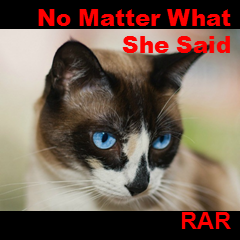
NO MATTER WHAT
SHE SAID:We have this cat, a Snowshoe Siamese, who my wife
named "Magnolia Thunder Pussy" after a '60s San Francisco radio spot,
and who came to us as a replacement for our dear deceased cat "Gary
Gilmore", also named by my wife. (One can imagine the psychological
damage or purr enlightenment the children have endured.) Anyway,
"Maggie" was a rescue cat, plucked from the Stanford University
campus by a student who found her injured, starving, alone; a refugee
from God knows what. Maggie grew to the size of a house living in the
student's apartment, but upon graduating Maggie's student-savior had to
give her up to move wherever Stanford graduates move to, so she put
Maggie on Craigslist and my wife brought this fat cat home. She slimmed
down, given some room to roam, and is now a much different cat from that
which she was when she came to us - accept for her monotonic meow.
I have no idea what this cat is saying. It may be "hello"; it may be
"there is a tarantula on your head", I don't know, it all sounds the
same. I assume her issues in this song. PLEASE PLAY LOUD SO I CAN CLAIM
THIS ON MY RESUME AS A BROADCAST PRODUCTION.
New Releases on RARadio: "Monica's
Frock" by Signel-Z;
"Natural Disasters"
by Corey Landis;
"1,000 Leather Tassels"
by The Blank Tapes;
"We Are All Stone" and "Those
Machines" by Outer
Minds; "Another Dream" by
MMOSS; "Susannah" by
Woolen Kits;
Jim Morrison, Elvis Presley, Michael Jackson
and other dead celebrities / news by A SECRET
PARTY; "I Miss the Day"by
My Secret Island, "Carriers
of Light" by Brendan James; "The
Last Time" by Model Stranger; "Last
Call" by Jay; "Darkness" by
Leonard Cohen; "Sweetbread" by
Simian Mobile Disco and "Keep
You" from Actress
off the Chronicle movie
soundtrack;
"Goodbye to Love" from
October Dawn; Trouble in Mind 2011
label sampler;
Black Box Revelation Live on
Minnesota Public Radio;
Apteka "Striking Violet";
Mikal Cronin's "Apathy" and "Get
Along"; Dana deChaby's progressive
rock
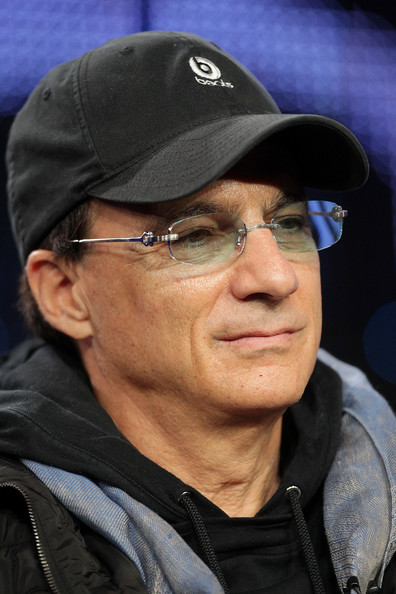
Interscope Records CEO
JimmyIovine
was featured in a recent piece in Rolling Stone, and it was one
of those rare celebrity interviews that actually yield insight and
useful information for people interested in music production and
engineering. READ
MORE...
My biography is sprinkled liberally throughout
this website. It is in my songs and stories and on my Projects page. This
section offers the background in summary form.
* * * * *
I was born in 1952 on Scott Air Force Base just outside of
East St. Louis.
I am a Libra.
My
father was a 23-year old Staff Sergeant in the United States Air Force, a radio
instructor at the base. My mother was 20.
My
father had grown up as the fair-haired son of a Nebraska farm family (Walter and
Besse Rice of Hays Center), and he was gifted. After excelling on exams,
particularly in mathematics, he was plucked from his country school and placed
in a boarding school at Curtis, Nebraska, where he attended high school. After
graduation, he became the first person in the Rice family to attend college,
enrolling at the University of Nebraska in Lincoln. Two years into his studies,
at a time when his older brother Charles was away in the service, his father
Walter fell ill and my father was forced to drop out of college to return to keep the
family farm in business. When Walter's health improved, my father signed up for the Air Force
and served during the Korean War.
On
a leave from the service he reunited with a McCook, Nebraska girl he had dated.
From a family of seven children, she had been born in Atwood, Kansas, and had
grown up on locations ranging from a Kansas farm to Oakland, California. She
attended high school in McCook. Graduating three years after my
father, she worked for a time in a doctor's office, then she and my father were
married. Phillip Walton and Ruby Dolores Rice, August 1951.
After
the Korean War ended, my father left the Air Force and went to work as a
television repairman in Lincoln, Nebraska. In 1957 we moved again, this
time to Englewood, Colorado, a new incorporated suburban development south of
downtown Denver. My dad took a job doing electrical engineering for the
Martin-Marietta Company, and he bought a brick home in a community heavily populated
with young Martin-Marietta families. He car pooled to work every day at the
missile testing site near Castle Rock, south of Englewood.
CHILDHOOD:
I
attended 1st through 6th grade in Englewood, one of the Maddox Elementary
"Madmen." My summers were spent playing baseball, winters playing
football. Each summer I would return to Nebraska for a week or so to stay with
my grandparents Besse and Walter, and with the family of my dad's sister Lillian
(Betty), the Fieldings. They had a farm
seven miles outside of little Hays Center (population 240), and I had adventures there with my
six Fielding cousins. We encountered rattlesnakes and skunks, rode cows, pulled
calves, drove farm machinery, milked cows -- we did a lot with cows. It was an idyllic childhood. One
summer I surfaced as "the city cousin" in a story in the Omaha World
Herald titled "City Boy Lassos Skunk." My Uncle Court had been
teaching me to throw a lasso and I lassoed a skunk, which responded as anyone but
me might have expected a skunk would.
After
the Kennedy assassination funding for the space program began to tighten. Most
of the conceptual developments that led to the missions of the 1960s had been
achieved between 1958 and 1961, and after that oversight on spending became a
government priority.
In 1965, my father got
an opportunity to buy into a hardware store in Atwood, Kansas, population 1,600.
He gave up his aeronautics job (by this time he was working for Beech Aircraft
outside of Boulder, Colorado) and our family moved to "The City By the
Lake," as the signs outside of town announced.
Atwood
was at once an idyll and a nightmare. The town was quaint and picturesque in a
kind of Mayberry way. At
the intersection of U.S. Highways 25 and 36, it was a cottonwood-canopied
village nestled next to a 43-acre lake in the cup of the Beaver Valley. There was a central courthouse square
with a beautiful two-story red
brick building with a bell tower. The county offices and courtroom were
upstairs, and there was a jail in the basement with bars on the windows. At the top of the boulevard that ran past the courthouse square was a high
school built in Kansas Stone, and downtown were four square blocks of locally
owned businesses that dressed up beautifully at Christmas. It was, on many
levels, a great little town. I played on the American Legion baseball team, and
participated in the school football and golf programs, with some additional
involvement in basketball and track. I rode my bike everywhere and skated on the
frozen lake in winter and up the Beaver Creek. I hunted pheasant and quail and
turtle dove. I did some fishing.
More than
anything, however, I dreamed
of the day I could escape the place. I had grown up in suburban worlds and
couldn't find much in common with my rural schoolmates. (I will never forget
that my first memory of conversation between my new seventh grade classmates was
two farm boys arguing over tractors. Tractors! I think one was a John Deere man,
the other a Case.) What was adventure over
a couple weeks in summer on the Fielding's farm was a drag as an every day
existence in Atwood. The fall after I
graduated from high school in 1970, I enrolled at the University of Kansas. I
was 17 and gone from home forever.
COLLEGE:I
loved the University of Kansas, but performed dismally. The Viet Nam War was still
raging. I was in the draft lottery in 1971 and, as I recall, drew 157 in a year
when they took up to 125. (There were 366 numbers representing each day of a
leap year, which were pulled from a "hat" and people were selected for
service based on their birth dates and the order in which the numbers were
drawn.) I don't recall feeling any connection to that serendipitous
lottery event or having any anxiety about it at all, which is a tip-off to my
mental state at the time. (Also, I was in college and student
deferments were available -- just ask Dick Cheney.) I was lost in a wonderland of hyperbolic sights and
sounds. The Lawrence, Kansas area was alive with anti-war activities. Village Voice/Hippie Poet George
Kimball was on the ballot to become Sheriff. I would go to the Jayhawk Cafe
and the Bierstube and find myself drinking with Yippies, who seemed to me to be
wearing American flag-inspired war paint. They scared the hell out of me. (They
were followers of Abbie Hoffman's "Youth International Party" whom I
took to be 30-year old volunteers to the youthful-female liberation program.) The
girls, however, were gorgeous and there was a guy who would come in the night to
your dormitory and place marijuana in your mailbox. His identity was not known,
but everyone called him "Weed Man" because he would leave a note with
the pot that said something like "Greetings from Weed Man."
Weed Man's stuff wasn't particularly good,
but I always thought his gesture was of a high quality. That somehow the dorm
police didn't intervene on this practice must say something about the climate of
the times in Lawrence, Kansas. It was a hippie town and if you liked that type
of thing, which I did, it was great. It was also incredibly distracting! I
rarely went to class. My classes were all screwed up anyway, because I didn't
know how to read the enrollment book, didn't really have an advisor, and found
myself taking whatever classes I could get into, sometimes without the benefit of
the prerequisites. I was tossed out for poor academic performance, readmitted on
the strength of a self-explaining essay (not unlike this one), then eventually tossed again. I lasted
two-and-a-half years, then retreated to dismal Hays, Kansas where I graduated
with an English-Journalism degree in 1975. (Fort Hays was the recently-deceased
Mickey Spillane's alma mater. There in the journalism department they still kept
yellowed pages of stuff he had written while there as a student. I always
thought the existence of this material was either somebody's silly good fortune
to have found something from a celebrity in a box in the back, or extraordinary
prescience on the part of somebody else, because based on my reading of the
writings Spillane was not obviously headed toward success.)
Fort
Hays Kansas State College, as it was called then, was not at all distracting. It
also held a much lower academic standard than had KU, but for some reason I
attended to my studies religiously and flourished as
Editorial Editor on the college newspaper. I wrote outrageous things, even
suggesting that American foreign policy wasn't entirely altruistic, and was
occasionally reprinted in newspapers around the state as an example of just how
screwed up some Kansas students had become. I went on to graduate school at Ball
State University, in Muncie, Indiana (David Letterman's alma mater) and pursued
a master's degree in journalism. Muncie was another really sleepy place, but the
journalism department at BSU had some strong faculty members. I was particularly
influenced -- and this is going to sound like a joke -- by a professor named Dr.
Larry Horney. He was a Princeton dandy but a very good teacher of writing
mechanics. There was also a professor there named Sheldon Kagan, whose brother
Paul (Paul Kagan Associates) was already an influential media consultant.
Sheldon's specialty was the business of publication management and he was an
intellectual mind twister, very effective at introducing a variety of ways to
visualize whatever was there to see.
I
gained preliminary approval to submit a novel in lieu of a dissertation to
complete the masters program, and I continued to work on a collection of stories
I had already begun, which I called "City By the Lake." It was a
Sherwood Anderson "Winesburg, Ohio" inspired book that struck me as
doable given my development to that point.
With
grad school classes completed, I took a job on a small daily newspaper in
Winchester, Indiana -- the News-Gazette. I had previously held paid part-time positions on other
publications, but with this position my journalism career was officially
launched.
More importantly, with "City By the Lake" I was what I considered to
be a real writer, on my way to becoming a novelist.
Go
to www.RickARice.com for career
information. Visit the Verse and Projects
pages on this site for additional family background.
*
* * * *
30 years back...
Today I live in
Benicia, California with my wife Joanne (married 1987), daughter Gillian (born
1995) and son Griffin (born 1997).
Sal Valentino
Beau Brummels
and Isolation
By RAR
Yours truly was a slow starter
in a lot of ways, probably in part due to a series of
unfortunate events, which I suppose is the métier and
defining operand in the lives of all people. My big issue
was that I was uprooted from the comfort of a suburban
lifestyle in a somewhat major metropolitan area (Denver,
1965) and relocated to an isolated hamlet in Northwest
Kansas (Atwood, Population 1,200) just about the time I was
coming into puberty. Apologies for the inclusion of that
last detail, but it is critical to the story, for hormonal
eruptions set people off in odd directions, and the coupling
of that craziness with the physical relocation of my
physical being was almost enough to cause a split in my
perception of reality, at least in that time and in those
moments. I became surly, detached, uninterested...I was at
my worst in those years, as I suppose is the case with many
cases of arrested development. And like most teenagers, my
retreat was into music, which spoke to me on a deeply
emotional level. I probably thought those songs were written
about me, not in actuality but in their knowledge of my
feelings. Other than The Beatles, which wallpapered my
interior life, and much of my exterior life too, there were
two bands that really spoke to me: the
Beau Brummels and the Zombies. The Zombies
warned me about evil women, which was a general area of
study completely new to me at the time, me being still
somewhat connected to my electric football game and other
remnants of childhood. The other was the Beau Brummels, the
San Francisco band that scored two hits, "Laugh, Laugh" and
"Cry Just A Little", which were tremolo soaked and
unbelievably sad, which was right on the emotional mainline
to my dysfunction. They sounded like cries for help carried
in the wind from some unknown island place for which rescue
could never come. That, to me at 13, was Atwood, Kansas.
In reality, the lonely sound of
the Beau Brummels was carried on the pipes of
Sal Valentino, a North
Beach kid who took has last name from that of a boxer that
his dad liked, and
whose life was the flip side of my own. Valentino, who was
born Salvatore Willard Spampinato in 1942, achieved success
in his early 20s, and then went down hill from there. San
Francisco music writer Joel Selvin traced the entire arc in
a 2006 piece for the Examiner (read
here).
Around 2002, Valentino started a
slow comeback playing open mic nights as a solo acoustic act
in the Sacramento area. There he met
Jackie Greene, a dude in his mid-20s at the
time, who has since scored successes as a solo artist (his
2003 Gone Wanderin' CD stayed on the Americana charts
for over a year) and been a band member of Phil Lesh and
Friends. Greene, who has modeled himself after a young
Bob Dylan, has an affinity for classic rock figures and he
has helped champion Valentino's comeback. In fact, he wrote
a song for Valentino, a live performance of which is shown
in the video in the right column, shot at The Palms venue in Winters,
California (Sacramento area).
FOLLOW-UP: Related to that personal account above of my
relatively brief life in rural Kansas - I left for the
University of Kansas at 17 and never really went back - I
got a call recently from Atwood, Kansas resident Skip
McCain, who is referenced in my
biography
on this site as an "older guy" who played drums and with
whom I jammed on a few occasions. Skip, who is now 65 years
old, took cheerful exception to my referring to him as an
older guy (back in the '60s). He reported that he has
re-purchased his original drum set, which is the model of
Ludwig made famous by Ringo Starr, but which Skip is proud
to report was purchased before he ever saw Ringo Starr. The
set got away from Skip over the years, but one of the odd
facts of life in the rural parts of the country is that such
items rarely go far. In fact, almost like community
property, people tend to know what others have and they tend
to keep track of items of particular interest. I know tons
of stories from rural Kansas where people have recovered
favorite cars, drum sets, amplifiers, etc., that they parted
ways with decades earlier but somehow still knew where they
were and how to get them back. And so Skip has done this
with his original drum set, which is particularly valuable
to him now that he has a grown son who is a drummer. Skip
further reports that the long-defunct Skyline Dance Hall,
a quanset-style cinder
block-construction dance venue that overlooks Atwood from a
hill on the northeast side of town, has been refurbished and
re-opened for a few special events. The building is historic
in the sense that it was built by hand by the local Morton
brothers as an entertainment venue for soldiers returning
home from World War II. Maybe a local historian can trace
its history, but by the 1960s it was closed as a venue and
used as a warehouse for a local merchant. This would make
the second historic venue to be re-opened in little Atwood,
Kansas in recent years, the other being the Shirley Opera
House, that has been covered extensively on this site.


 Learning
from Jimmy Iovine
Learning
from Jimmy Iovine

 With
grad school classes completed, I took a job on a small daily newspaper in
Winchester, Indiana -- the News-Gazette. I had previously held paid part-time positions on other
publications, but with this position my journalism career was officially
launched.
More importantly, with "City By the Lake" I was what I considered to
be a real writer, on my way to becoming a novelist.
With
grad school classes completed, I took a job on a small daily newspaper in
Winchester, Indiana -- the News-Gazette. I had previously held paid part-time positions on other
publications, but with this position my journalism career was officially
launched.
More importantly, with "City By the Lake" I was what I considered to
be a real writer, on my way to becoming a novelist.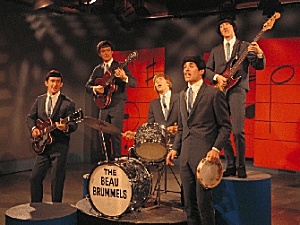
 FOLLOW-UP: Related to that personal account above of my
relatively brief life in rural Kansas - I left for the
University of Kansas at 17 and never really went back - I
got a call recently from Atwood, Kansas resident Skip
McCain, who is referenced in my
FOLLOW-UP: Related to that personal account above of my
relatively brief life in rural Kansas - I left for the
University of Kansas at 17 and never really went back - I
got a call recently from Atwood, Kansas resident Skip
McCain, who is referenced in my