ABOUT RAR: For those of
you new to this site, "RAR" is Rick Alan Rice, the publisher
of the RARWRITER Publishing Group websites.
Use this link to visit the
RAR music page, which features original music
compositions and other.
ATWOOD - "A Toiler's Weird Odyssey of Deliverance"-AVAILABLE
NOW FOR KINDLE (INCLUDING KINDLE COMPUTER APPS) FROM
AMAZON.COM.Use
this link.
CCJ Publisher Rick Alan Rice dissects
the building of America in a trilogy of novels
collectively calledATWOOD. Book One explores
the development of the American West through the
lens of public policy, land planning, municipal
development, and governance as it played out in one
of the new counties of Kansas in the latter half of
the 19th Century. The novel focuses on the religious
and cultural traditions that imbued the American
Midwest with a special character that continues to
have a profound effect on American politics to this
day. Book One creates an understanding about
America's cultural foundations that is further
explored in books two and three that further trace
the historical-cultural-spiritual development of one
isolated county on the Great Plains that stands as
an icon in the development of a certain brand of
American character. That's the serious stuff viewed
from high altitude. The story itself gets down and
dirty with the supernatural, which inATWOOD
- A Toiler's Weird Odyssey of Deliveranceis the
outfall of misfires in human interactions, from the
monumental to the sublime.The
book features the epic poem"The
Toiler"as
well as artwork by New Mexico artist Richard
Padilla.
Elmore Leonard
Meets Larry McMurtry
Western Crime
Novel
I am offering another
novel through Amazon's Kindle Direct Publishing service.
Cooksin is the story of a criminal syndicate that sets its
sights on a ranching/farming community in Weld County, Colorado,
1950. The perpetrators of the criminal enterprise steal farm
equipment, slaughter cattle, and rob the personal property of
individuals whose assets have been inventoried in advance and
distributed through a vast system of illegal commerce.
It is a ripping good yarn, filled
with suspense and intrigue. This was designed intentionally to
pay homage to the type of creative works being produced in 1950,
when the story is set. Richard Padilla
has done his usually brilliant work in capturing the look and feel of
a certain type of crime fiction being produced in that era. The
whole thing has the feel of those black & white films you see on
Turner Movie Classics, and the writing will remind you a little
of Elmore Leonard, whose earliest works were westerns.
Use this link.
EXPLORE THE KINDLE
BOOK LIBRARY
If you have not explored the books
available from Amazon.com's Kindle Publishing
division you would do yourself a favor to do so. You
will find classic literature there, as well as tons
of privately published books of every kind. A lot of
it is awful, like a lot of traditionally published
books are awful, but some are truly classics. You
can get the entire collection of Shakespeare's works
for two bucks.
Amazon is the largest,
but far from the only digital publisher. You can
find similar treasure troves atNOOK
Press(the
Barnes & Noble site),Lulu,
and others.
Archives
General interest pieces from
previous editions of the Links at RARWRITER are archived here. Click on a link
below to go to the archived article.
NOTE ON REORGANIZATION: Several articles
related to Colorado artists that have previously been stored on this page
have been moved to the Boulder Archives
page. If you are looking for something you have found here in the past, but
now seems to be missing, please check the Boulder Archives.
Why Johann Sebastian Bach Would Be
Living on Food Stamps Today
The piece below - one
educated man's point of view on why Bach remains an
important composer today, and why modern pop music hardly
lasts more than a few weeks - won't satisfy any academic's
standards in explaining what is so classical about
classical musical. It does, however, put into context
something about what is wrong with music today; that
is if there is anything wrong with music today. Not
to give away the ending, but the fellow in the video below
is going to say that pop music is of low value because it is
one dimensional, a riff on a single emotion (for instance),
as opposed to the work of Bach, who toured listeners through
a range of exquisite emotion that taken altogether added up
to a thematic statement. Correct he is, in this viewer's
opinion, but thanks be to Bach's lucky stars to have worked
in the early 18th Century, before the advent of radio and
the information chunking age. We don't really do big themes,
anymore, not only because we don't do long form music, as
they did in Bach's time, but because we modern listeners
just aren't that smart. We need little bits of information
at a time, because there is this attention span deficit that
vexes. And besides, knuckleheads like Bach and his "songs"
that go on forever are just too much to remember.
Today, A&R people would suggest that Bach read some books on
music marketing and focus his melodies more; stop the
rambling about, establish a hook, and build to a big chorus.
Just judging by his looks
,
I suspect that Bach may have replied with something like
"Fuck yourself, you idiot moron", because his were less
politically correct times, though I would hope instead that
he might have gotten ironic with it and said something like,
"So you want me to be more like Bruno Mars? Or Jason Mraz?"
Or perhaps simply become curious as to direction and asked
today's music directors - "Where, exactly, are we going with
this?"
Musician Chris Ethridge passed away
recently, an event that brought renewed focus on his career
and attention to a bunch of videos of Ethridge in his
performing days. The one below is from the ill-fated
Altamont concert in 1969, which became notorious for its
shoddy execution, including the use of the Hells Angels
motorcycle club for security. Mayhem ensued, including a
murder just in front of the stage. The video below captures
part of the event, with Ethridge on stage with seminal
Country-Rock band the Flying Burrito Brothers. You don't get
much of a look at the Burrito Brothers (which included Gram
Parsons, Chris Hillman, and Sneaky Pete Kleinow, though
there is a nice few seconds showing drummer Michael
Clarke, an old friend of this site, who came to fame in
the precursor band to the Burrito Brothers, The Byrds.
For musicians in
my age group, the Baby Boom generation, North Carolina-native Doc Watson, who
passed away recently at age 89, was the guy who built the artistic bridge that
connected "traditional-plus" folk music to the space age. That he did it as a
blind person seemed to focus his hearing and his sense of touch, which seemed
super human in many respects. Though he had been an electric guitarist early in
the history of electric guitar, and laboring in obscurity, it was his return to
his acoustic roots that launched him into a mythical stratosphere, which is the
plane on which he spent the last 50-plus years of his life.
Doc
Watson had some specific gifts: extraordinary timing and a
seemingly peerless vision regarding his right-hand attack.
Watson was remarkably horizontal in his left-hand approach,
all double and triple stops and, as you can see from the
video here of him playing "Black Mountain Rag", a master at
playing across the fret board to find the dynamics
that lesser players assume are the province of vertical
thinking. There were no pyro-techniques with Doc Watson, no
showboating, but rather incidental accents and flavorings
that happen with such complete integration into the melody
lines he played that one might listen and wonder why no one
ever thought of that before! But no one had, and few ever
would, because precious few could match the casual
virtuosity of his right-hand approach. The casual
aspect to Watson's playing was hugely impactful, because
while he was playing at what, for most people, would be
breakneck speed - emphasis on the picking hand - Watson
never seemed about to go off the rails. As it was with the
dancing of Fred Astaire, Doc Watson made playing the
acoustic guitar - which is not nearly as pliable of an
instrument as the electric, the Les Paul he had played when
they were first developed in the '50s - seem effortless,
like a natural expression. And through videos such as this,
Doc Watson will live on to inspire people for generations to
come, just as has Estaire with his grace and style.
- RAR
I keep trying to
remember why we have the Rock'n
Roll Hall of Fame, and why exactly it is located
in Cleveland, Ohio. Even why the building looks like it
does, which I have a hard time equating to rock'n roll, if
such was the design intent of architect I.M. Pei (“I didn’t
know a thing about rock and roll,” he has confessed - see
RnR HOF site).
The stated mission of the Rock'n Roll Hall of
Fame is "to educate visitors, fans and scholars from around
the world about the history and continuing significance of
rock and roll music".
Ray Charles - among the first class of
inductees - could see what a line of cheap chum that all is.
Like many of these cultural recognition schemes, the Hall of
Fame started as an idea hatched among a bunch of New York
music industry people, whose simple notion was to get a
brownstone in the city and populate it with rock memorabilia
and charge admission for visitors to get in. Then the City
of Cleveland, Ohio, which was in the midst of a
revitalization program (North Coast Harbor), heard about the
organization and made them an offer. "They had these
wonderful diagrams for a museum that would be much larger
than any town house we had originally thought of,” said HOF
spokesperson Susan Evans. This led to a design competition
among major cities, including New York, San Francisco,
Chicago, New Orleans, Detroit, Cincinnati, and Memphis, any
of which seemed more culturally suited to such a venue than
does Cleveland, but credit to the State of Ohio and the
Cleveland delegation that pressed for the museum, which they
won 25 years ago. They put up $65 million to build the
thing, which is really why the museum is in Cleveland.
On one level, there probably is value in
having some repository for high-end memorabilia from an
important aspect of American culture, a museum as it were.
On the other hand, it's just a roadside attraction; more
appealing to multi-generational families than, say, the
boyhood home of Dwight Eisenhower or other such museum
alternatives, but still just something set up with a ticket
window. And it is in Cleveland.
Cleveland disc jockey
Alan Freed is widely
credited with promoting the genre called "rock and roll",
and the first Rock'n Roll concert is said to have been
staged in Cleveland in 1952. Freed, who hosted a radio show
under the moniker "Moondog", hosted an event called
"The Moondog Coronation Ball".
In a manner that may have pre-saged the payola scandal that
brought down his career - Freed died of alcoholism in 1965
at age 43 after struggling with post-scandal employment -
show promoters oversold the event. In fact, hustlers flooded
the market with counterfeit tickets and 20,000 people showed
up for a venue that would hold no more than half that. Riot
conditions developed. Opening act
Paul "Hucklebuck" Williams performed one song and
then the police shut the whole thing down. That, on some
level, was the "birth" of the rock'n roll concert
experience, though hardly the birth of the genre. And even
that concert claim is dubious. There was, after all, the
Apollo Theater and other venues that had been presenting the
forerunners of rock, in the form of Blues, Jazz and Folk
musicians, for years. So really the City of Cleveland has
precious little to do with rock'n roll, but Alan Freed - one
of the first Hall of Fame inductees - had a tremendous
amount of influence on popularizing the genre, not that it
wouldn't likely have happened anyway even without him. Who
knows the real weight of any individual's contributions? In
Freed's case, the world did.
Freed relocated in 1954 to do radio in New
York City, and he was featured in a series of movies (Rock
Around the Clock, most notably) with rock'n roll themes,
which made him a big star. His influence spread to Europe in
1956 when he began doing 30-minute rock'n roll shows for
Radio Luxembourg, and in
that audience were youngsters from England, including
Liverpool. One of them - John
Lennon - had a band called
Johnny and the Moondogs,
which he renamed after learning that Alan Freed already
owned the "Moondog" handle. Freed's Radio Luxembourg show is
really the linchpin that linked the purely American form of
Rock'n Roll to the coming era of British Rock.
On the other hand, in a really conceptual
way, I suppose one could imagine a tornado of rock music,
with its debris funnel touching down in Cleveland, Ohio.
Then the main funnel could be viewed as expanding upward and
outward to include all places and events after "The Moondog
Coronation Ball" of 1952, connecting all spots on the globe,
because that is really where the excellence extolled by the
mission statement of the Rock'n Roll Hall of Fame resides:
in the ether, and in the minds of the beholder (now
viewers as much as listeners). Excellence,
after all, is at least somewhat subjective. This year's
inductees include the Beastie Boys,
the Red Hot Chili Peppers,
the late singer/songwriter Laura
Nyro, Donovan, The Small Faces/The Faces, which
included Rod Stewart and
Rolling Stones guitarist Ronnie
Wood, and Guns'n Roses
(though Axl Rose, now
touring that band with a different lineup, is declining to
attend).
Of that group of inductees, only
Donovan strikes me as
truly worthy of the honor. That few can remember exactly why
is, perhaps, reason enough to have such commercial reminders
as the Rock'n Roll Hall of Fame - in Cleveland.
- RAR
See kids, subversive
musical types like Dan Hicks, who will celebrate his 70th
birthday April 6 at San Francisco's plush Davies Symphony
Hall, have been flipping off photographers forever. This is
probably one of the weirdest affectations of all
professional poses, but practically part of the standard kit
of deliverables for deconstructionist of the popular music
vein. This is, after all, street business, and the
louts who get knocked around all day for low pay have a kind
of "fuck you" attitude and somehow Dan Hicks and the Hot
Licks have always captured that in an alternative musical
way.
Hicks started his musical life as a boy
drummer in a Santa Rosa high school marching band. He was
distracted for a time, earning a degree in broadcasting from
San Francisco State College, where he also took up the
guitar, but after graduating he drifted into loud and loose
company, becoming the drummer for the seminal "San
Francisco" rock band The Charlatans.
The Charlatans came into full form at a 1965
house band engagement at the Red
Dog Saloon in Virginia City, Nevada, and there,
good readers, began the modern era of music in San
Francisco. What happened is that the Red Dog performances
became a "be-in" type of event, a psychedelic forerunner
that would set the template for what was soon to become the
"San Francisco Sound". With a passing reference to the 1967
Summer of Love, the SF sound carried a distinct musical
signature that blended folk, rock, blues and jazz, producing
strains that were identifiable for their San Francisco DNA
even while exhibiting a phenomenal range of musical stylings.
Ambitious bands like The Grateful
Dead, Jefferson Airplane and
Quicksilver Messenger Service came out of that
pot house. Dan Hicks, though known to only the most hip of
musical connoisseurs - that has changed over time, as he
stayed around to become a living legend - was a key figure
in what seemed and smelled like an organic development.
San Francisco, prior to The Charlatans, was
high-end jazz clubs, the bohemian scene in North Beach, and
Carol Doda, a waitress
(whose breast measurement had been enlarged to 44") who
almost single-handedly created the topless bar and made
The Condor Club an
historic site. There was a folk scene and within that there
was a subversive element, including the members of The
Grateful Dead, whose inspiration included jug band music,
which even in 1965 seemed about as deconstructionist
as one could get. There's that fuck you finger, again, or so
subversiveness has always seemed to me. The mere act of
choosing alternative instrumentation - and in 1965, that
included the instruments of our grandfathers, because the
electronics of rock'n roll had obliterated the wood era of
modern music - seemed radical, like a statement that said we
can control your hearts and feet and minds without banks of
Marshall amplifiers to make you feel energized. At the same
time, Dan Hicks and the Hot Licks
- Dan Hicks had moved on from The Charlatans by this time -
were that dangerous contrapuntal alternative, cutting
through the fog of the psychedelic era with acerbic wit,
devilish licks, a fun stage act, and attitude. And it
was not necessarily the attitude of gratitude, or any
other such Summer of Love bullshit, but more like the
attitude of a sly table-side slight-of-hand artist; the kind
that picks your pocket while you are watching him
mysteriously toss playing cards so they stick to the ceiling
above. Just for reference, I always thought of Dan Hicks as
Dan Hicks and the Special Niche, because like his
friend Ray Benson, with
Asleep at the Wheel, Dan
Hicks rolls into town with a truck load of musical tradition
that onstage translates into gravitas and makes one feel the
presence of a dangerous force.
Dan Hicks and the Hot Licks, because of
authentic talent and all of that history just referenced,
means something. Exactly what that something is may be a
study still in motion - I sense there are clues in the
wonderful artwork that Dan Hicks has created for his album
covers over the years - and on April 6 a whole bunch of
highly qualified subject matter experts are getting together
at Davies Hall to play it out, make tribute to Dan Hicks,
and see if it all adds up to a conclusive whole. The
performers that night will include the Original Hot Licks
plus The New Millenium Hot Licks (Roberta
Donnay and Daria),
Tuck & Patti, Rickie Lee Jones,
Ramblin' Jack Elliot, Maria Muldaur, John Hammond, Harry
Shearer, Van Dyke Parks, Roy Rogers, Jim Kweskin, Bruce
Foreman and Ray Benson.
- RAR (4-6-12)
Six bass
drums, two snares, and 26 melodically tuned toms of various
sizes (all DW Vertical Low Timber drums), a Roland Handsonic,
glockenspiel, six hi-hats, 30 cymbals, three gongs, and a
one-octave tuned set of Wuhan Chinese bossed gongs. Toms are
arranged in rows of two and three, many of the cymbals are
stacked, and 18 floor pedals are arranged in a semi-circle
for operating kicks, hi-hats, toms, and various percussion
instruments...
There is an old
baseball maxim that states that fielders are easy to
find, particularly in the Latin leagues: shake a tree and a
dozen gloves fall out, but try to find a guy who can hit
major league pitching and you are in pursuit of one of the
rarest treasures in all of sports. (In what other pursuit
can guys who are successful in less than 30 percent of their
efforts pull down 7-figure annual salaries?)
Ditto for really good
drummers. Drummers are falling out of trees too - what else
could explain such personalities - but most land on their
heads and then start banging away without having any
knowledge of musical composition or even basic notation.
They are not musicians, in all too many cases, but
more like framing carpenters who lay down a bull work of
scaffolding upon which to hang melodies and chord changes
and vocal arrangements. This has always been a fairly
abysmal process, at least from a songwriter's perspective;
rather like trying to wire a house with the assistance of a
friend who really only knows how to hammer studs into place.
It is frustrating as hell, and I suspect that it has gotten
ironically worse over the last couple decades, since the
advent of hip-hop has led young dudes to believe that
"building beats" is the same as making music. All it really
is, of course, is providing a static metronomic groove over
which to mouth a bunch of rhyming words, usually
unencumbered by the demands of actual melody. This is the
thing I hate most about hip-hop: lack of musicality, with
melody jettisoned in favor of bleats and exclamations and
repeats - which now that I think of it is all the same
things that most drummers provide, not melodic enhancements
or expressions, but droning click tracks marked by periods
and exclamation marks.
Back in the early 1980s, a drummer friend of
mine - I actually do have friends who are drummers, despite
my cold reaction to what many of them do - named
Gerry Capone introduced me
to Terry Bozzio, the
former Frank Zappa prodigy who at the time was running his
band Missing Persons.
Fronted by Dale Bozzio,
Terry's wife at the time, and including refugees from
Zappa's outfit (Guitarist Warren
Cuccurullo and Bassist
Patrick O'Hearn), Missing Persons was pretty
straight-forward stuff compared to the musical-intellectual
boot camp the players had emerged from (i.e., Zappa), but
the drumming was anything but "beats", as the kids of
today say.
Terry Bozzio was using a big kit even back
then, though about half the size it is now, and the thing
that really jumped out at you was his polyphonic approach to
playing coupled with Olympian physical capacities. He had a
string of tuned hi toms that he could roll through
with one hand, and do it seamlessly in such a way that his
drums were a part of the musical arrangement, rather than
just a set of boxes providing a groove beat. It was awe
inspiring, not in that Travis
Barker bombast way, but in that way that was
really born in the much earlier big band era, when master
drummers like Gene Krupa
and Buddy Rich
(among many others) were propelling sophisticated sounds
with musical ingenuity and showmanship.
Bozzio recently gave a clinic on drumming,
which is what the video above comes from. If you are
wondering if that ridiculous drum set he sits in the center
of is all bells and whistles, just gimmickry and useless
overkill, check out his video for some thoughtful
illustrations of percussive musicality.
- RAR
Man, that must have hurt. And while it is a
paraphrased version of the news that landed hard on Kenny
Loggins' protruding ears, it is pretty much the narrative
that infected Loggins' label of 30 years, Columbia Records, now a
part of Sony Music.
"It wasn't until I got a call from my
manager, who heard it from a secretary to an
under-assistant, who was told in passing by the janitor,
that my services would no longer be needed at Sony." So
writes Loggins in a blog he is doing for Huffington Post's
"Over-50" series, an invitation for participation being
something of a cold bath in itself. The Baby Boomer
generation is having to get used to the fact that our youth
is gone and there are new fools in town, more fun than the
likes of us, with all of our spent energy and growing
reliance on philosophical perspective.
That's what poor Kenny is left with,
philosophy, which in our age group usually means that he
watched those Bill Moyer
interviews with the hot-house-flower-of-philosophers
Joseph Campbell, who taught
us all that we are on a journey, which is meaningless
unless that journey is our own. This is pretty comforting
bullshit, pardon the editorializing, to those such as myself
who tend to cling to the sustainable nature of its central
thread: that we are not seeking a destination so much as
experiencing an adventure. I am not sure why this strikes us
as profound, given the results of the empirical study that
make up each day of our lives, but somehow it does feel
profound to us.
Kenny Loggins thought that he had arrived,
some thirty years ago, at his destination and that the rest
of his days would be in situ; specifically, in that
situation of "fame", where he would always be supported by
the good folks at Columbia. Or, as he writes - "I'd been on
Sony/Columbia Records since I was 21 years old, and the
habit of being their recording artist was deeply ingrained.
I'd seen about six different company presidents come and go,
so I began to actually believe I would slip by like
Johnny Mathis did, and just
hang out there forever, '10 feet tall and bullet proof.'"
He had good reason to feel secure, because
his albums were still selling a million units; not chart
toppers, but steady. On the other hand, Loggins sells almost
exclusively now to a diminishing pool of old women who fell
in love with him in the 1970s when he was with
Loggins & Messina. I
personally know women who swoon at the memory of his young
self. On the other hand, a few years back I saw him playing
a Saturday afternoon skating event called something like
"Kenny Loggins On Ice!" and knew then that he was in
trouble.
One might get the impression, from reading
Loggins' Huffington Post blog, that all this drama at the
end of his Columbia career happened only recently. Such is
not the case. Loggins has been around forever, hitting first
with the Electric Prunes,
when he was only 18 years old.
Loggins gets songwriting royalties, which
puts him in a better financial situation than someone like
Whitney Houston, who was
exclusively a singer for hire. That said, mechanical
royalties don't amount to much if your tunes aren't played
on the radio or covered by other artists, and over Loggins
30-year tenure with Columbia that kind of payback diminished
greatly, until by the time he and Columbia parted ways there
was not a great deal of money in the Loggins coffer.
Loggins, suddenly faced with unemployment,
panicked as most anyone would. He apparently burned through
his savings, and lost another marriage, trying to scramble
together a self-produced CD ("It's About Time", 2003) that
went nowhere. (He hadn't produced anything but childrens
music and Christmas albums since 1997). "But through that
process I'd discovered the problem with my head wasn't what
I was doing, it was why I was doing it. I had to see that
'writing' for me is simply who I am, and that's not really
Mr. Rock Star. I had to learn to stop judging my success,
indeed my self-worth, by my sales. 'Control the
controllables,' my friend Bill
Leopold used to say, and whether or not folks
flock to your door with fists full of cash does not fall
under the category of 'controllables.'"
Loggins landed on his feet, in that humbling
way that might be devoutly wished for by any other marginal
music pro: he got a gig developing music for a Target
commercial. That connected him with some other music pros
that he feels comfortable with -
Garry Burr and Georgia
Middleman - and so they have launched a new band,
Blue Sky Riders.
Kenny Loggins is starting over again, just as
we all do, getting up each morning regardless of what
happened yesterday, and wandering out into those uncharted
regions armed with only his experience of having traveled
before, and whatever remains of his skills and resources.
- RAR
Damned few authentic talents have emerged
in music, not just in the past however many years, but
ever. They come along only once in a great while and for
some reason many of them last only a brief time. So it was
with Amy Winehouse,
found dead yesterday in her North London home. Her
"Back to Black" video is a
pretty good summation of her world view, which was
unremittingly inspired but bleak. She wanted to be an artist
and she achieved that. She also disastrously became a
substance abuser and manic depressive with the associated
self-esteem issues, and through all that an icon to
less-than-fabulous disaster. And yet to her fans, there were
only the classic melody lines, the smirk, the pooled eyes,
and the deep, round-tone voice, un-diluted by any
inclination to be any other than itself. Her toothy smile
bespoke a vulnerable soul, which was the final link in the
connection she made with fans around the world. We rooted
for her to survive, to get well. I have no idea if she now
is, only that we all have lost a channel to something real
in human feeling and expression, and with her passing a bit
of our own opportunity to know the sublime is lost.
- RAR
The picture is from an
Arhoolie album featuring the artistry of a true folk musician:
JC Burris.
Born in 1928 in N Carolina, nephew of blues giant
Sonny Terry, JC moved to San
Francisco in 1961 & played in Barbara
Dane’s Sugar Hill club and on the streets.
He had a stroke in
1966 and it would take some 7 yrs to recover from the effects.
I met him in mid
1970’s when I opened for him at
Rosebud’s in Benicia, Ca.
He played solo harmonica & sang, rhythm bones, hand jive, and
one of the highlights of his “show” was when he brought out Mr.
Jack, a dancing man (like those on the picture)
Whom he characterized as being “bad” and needed to be “hit on
the head.” When Mr. Jack was “punished” he danced on a wooden
board to an eccentric, old time, rhythm.
When JC did the
Hand Jive there was nobody better.
The video will show
all of this and it is good that it was captured on film.
Both Sonny Terry &
JC Burris were captured on film by Pete & Toshi Seeger in 1957
in N Carolina. On DVD by Vestapool.
I saw that dvd
today & was reminded how kind JC was to a young & certainly
fledgling musician.
He got up & played harp w/me on Blood Red River & today I
learned that he knew Blind Boy Fuller as a child.
Check out the link
& celebrate a nice guy who was very talented & passed much too
young. - Douglas Strobel
The hot weather brings the summer tours and
for the past three years that has pitted two of
the only colossally large pop acts left standing:
Katy Perry
and Lady Gaga. RARWRITER.com respects both, but it is Katy we really love. The
video below of her extremely compressed preparation time before
launching the first big show of her tour tells why. Katy has an
amazing perspective at 26 years of age, which compares rather
favorably against the monstrous machinations of Lady Gaga.
If social history means
anything at all - and it does, usually more than we can
comprehend as it is happening - we are about to
experience something fresh, new and revitalizing; something
through which the human spirit will be reborn, at some level,
and aspects of living will be reinvented for a new age.
What we may go
through to get to this new place may not be pleasant. In fact,
it will likely be
awful.
What will transpire,
however, will inspire generations to come while antiquating the
thinking of generations that have gone before. Mankind will not
be
transformed but as a global community we may feel that we
have been.
We will fall under
the spell of a new avatar, who will tap into that channel of
communications that exists incomprethin our human beings and
vibrates at the core of our response to the world we experience.
It happened in
the 1930s, during the ironically dubbed "Great Depression", the
first world-wide socio-economic phenomena in human history,
which ushered in a new age of planetary engagement and
awareness. In that "event" we had the key ingredients of change:
traumatic disruption to the status quo, social unrest including
broad public disillusionment with ideas previously considered
"sacred", and open expressions of need.
We turned on the radio, tuned
into film, and opened our hearts in hopes that our voids would
be filled with something hopeful, imbued with salvation. And
while we met on the battlefields of Europe, Africa, the Pacific
Isles, and Asia, we slaughtered to the sound of an odd
entreatment,
of big bands crashing wildly on brass and skins and melodic
metals, Sinatra stepping forth from Tommy Dorsey's army of sound
to rev up the romance, and build the launch pad of the next
generation, which was pop culture.
It wasn't all for
the good, of course. In electrifying the young people of "the
Greatest Generation", Sinatra and his counterparts paved the way
for a transition to youth culture that had the unfortunate
effect of bidding adieu to some of the greatest contributors of
the first half of the 20th century: George and Ira Gershwin,
Cole Porter, Duke Ellington... Sinatra, to his everlasting
credit, always made it a point to introduce his songs with
references to their composers, their arrangers, and to his
supporting musicians.
The establishment of pop culture,
with its emphasis on youthful themes, became a catalyst itself
in the 1950s, in which trauma took the form of the "Korean
Conflict", there was growing civil unrest in the south, and the
needs of the nation included growing economic disparities
featuring pockets of devastating poverty, and this in a nation
that now stood astride the globe and claimed the 20th as the
"American Century".
This combination of societal
pressures coupled with technological change ushered in "the age
of Elvis", who married visuals with music in a way that changed
the way people expressed themselves thereafter, and in turn
opened the door for "race music" to enter into the panoply of
the new pop culture. Big wheels turning indeed.
Trauma to the new pop culture
world, which by then had become a televised event, came in the
form of a rapid-fire series of bullets discharged in Dealey
Plaza in Dallas, Texas on November 22, 1963. It was a crack in
the newly formed cosmic egg, to borrow a title of the times.
Trauma, Unrest and Need, the holy triumvirate of
change, unsettled horsemen on the road to apocalypse, rode us
into the next age, the "Age of Aquarius" whose avatars were The
Beatles, whose spell we have remained under these many years.
Who will it be
now, that the cycle of trauma, unrest and need is upon us anew;
possibly not fully vested yet? The shock may be soon to come,
and it feels unsettling. The trials of life, gnashing of teeth,
rending of hair...it is precursor to what will eventually be,
which will likely be profoundly positive, for hard times tend to
strip humanity to its core, and while this often
reveals the worst in us, the thing that always prevails in the
end is love, the best in us. However dysfunctional we
become as groups and individuals, the one shared aspiration we
have without question is the need to love and be loved. The
Beatles got it right and they produced a brilliant tribute of
sound in celebration of the insight.
Now it is someone else's turn,
someone who is somehow gifted with light the way the previous
avatar's of change were. They will always be artists, rather
than politicians, business people or religious leaders, because
art, and particularly music, transcends all human experience,
speaking uniquely to each and every one of us even as the entire
world hears and shares its sound.
It is magic, and
the next Cosmic Magician is out there somewhere. Maybe this time
this person will
be a Black or an Asian. We haven't seen a female
avatar as yet, but it could be part of what will change.
Whatever color, and whether boy or girl, the person will be as a
Shaman, confident and wise in his or her ways, though likely
without pretension. He or she will be young and it is almost a
certainty that "we" do not know at this time whom he or she is.
Someone does though. Maybe there
are friends who notice a certain flash in someone in their
company that seems other than that coming from anyone else.
There will be charisma and nascent creativity that will start to
grow by staggering bounds. There will be fun and energy. There
will be organic phenomena, like people skipping work to go hear
this agent of change sing and play, drawn to the flame like a
moth to a light, and lines will grow around the block where this
"change artist" sets up to play. And word will get out through
the Internet and social networks, and the message will somehow
obliterate the competing, numbing buzz of those who don't yet
know that they are of a time already past.
They won't have
seen or heard anything like this.
And the spirits and the minds of
people worldwide will be changed through some future event, some
Ed Sullivan moment when some cosmic MC will step before the
cameras to say "Now yesterday and today our theater's been
jammed with newspapermen and hundreds of photographers from all
over the nation, and these veterans agreed with me that the city
never has seen the excitement stirred by these youngsters
from..."
And the camera's
will pan to the new light, and the world will be born anew.
___________________________________
The Beatles, 1964, rehearsing
back stage for the "Ed Sullivan Show". There is a nice account
of the story behind the booking of The Beatles for the series of
Ed Sullivan shows they did in early 1964, which introduced them
to American audience, thus bringing "Beatlemania" across the
pond from Britain to the U.S.
Click here to read the back story.
Recently,
RARWRITER.com received an email message from a former Boulder
resident - "back then it was 'Cynde Holmes'" - who was
interested in information about another former Boulderite. The
communication went as follows:
"I came across your
web site looking for an old friend from Boulder. To my surprise,
I read about many people I used to know from Boulder CO back in
the 70-90's. I was a wild one back then. There is a friend of
mine I knew in Hollywood[ Calif} back in the 60's. His name is
Michale Port. Bass player. Was in a group called The Sons of
Adam. They never got very far. The man who produced Sonny & Cher
was their manager. {I think} Michale also did studio work for a
band called Love. I don't know how old you are, so I don't know
if these musicians are before your time. Is there any way you
can find out if he is still on the planet? He was a close friend
and for some crazy reason I thought of asking you. It was really
good to read about so many guys I used to know and hear where
they are today. Boulder was a crazy town, I was one of the
crazies from there. Thanks for whatever you can do. In fact,
Michale was the reason I wound up there, It was the last place I
saw him. Cindy. P.S. At one time he thought of changing his last
name to Anderson {it was his grandparents' name}."
Originally a "surf band" out of
Baltimore called the Fender IV, because guitarist Randy Holden
had wangled a Fender endorsement, they drifted west and eventually
reached L.A., where they became the Sons of Adam and had one
minor hit single with "Mr. You're A Better Man Than I,"
which was a British Invasion-flavored departure from their
earlier surf sound. Sons of Adam, pictured here (circa 1966)
from left to right, are: Michael Stuart-Ware, Randy Holden, Joe
Kooken, and Mike Port.
"Mike Port was our bass player.
Thin, soft features, baby face, gentle, expression, but the
other guys had filled me in. As a kid, Mike was forced to fight
his way through one of the toughest neighbourhoods in Baltimore
everyday, to get to the store and buy his Mom a pack of camels,
so he got tough. (more in his book)."
That quote appeared
in the book 'Pegasus Carousel' by Michael Stuart-Ware,
the drummer for the Sons of Adam. Go to
http://www.bryanmaclean.com/sonsofadam/index.htm for
additional information on MacLean and the Sons of Adam.
MacLean had been a
roadie for The Byrds, joined the Sons of Adam and lived with the
band in their communal style in L.A. before splitting for a new
band, Love, leaving this quote: "The Sons
of Adam are never gonna go anywhere. They’re just another band.
My group Love is about to record some shit that’s bound to blow
everybody’s mind ..."
MacLean had met
multi-instrumentalist Arthur Lee, whose band The Grass
Roots was a popular house band at The Brave New World club in
West Hollywood. When a San Francisco band by the same name
released their first LP, the L.A. Grass Roots changed its name
to "Love." Essentially a psychedelic rock outfit, they produced
some interesting music including a lasting composition, "Alone
Again Or" that was written by Bryan MacLean.
If you are out
there, Mike Port, or if anyone has information on Mike Port,
contact Rick@RARWRITER.com.
Profile:
Graphic Illustrator and Concept Designer
Daniele Montella
Genoa,
Italy - Genoa-bornDaniele Montella studied art,
painting and sculpture at the Artistic Liceo before becoming Art
Director for Italian advertising agency Artematica. He has been
credited with concept art and painting on numerous video games,
including Crime Stories: From the Files of Martin Mystère
(2004), Leader S.p.a. Druuna: Morbus Gravis (2001), and
MC2-Microïds. You can learn more at Daniele Montella's website
at
http://www.dan-ka.com/2008/home.asp.
RAR became aware of Daniele's
talents through an image called "Haunted House," described in
detail at
http://features.cgsociety.org/story_custom.php?story_id=2634.
Daniele takes readers and viewers on a step-by-step explanation
of how the extraordinary image was pieced together from other
images and enhanced to produce the final truly wonderful vision.
I have used the image of Daniele Montella's "Haunted House" on
the Essay page of rarwriter.com. Take a
little time to wander through the detail of that composite
image. I could spend all day there, myself. Really fabulous work
by a gifted visual designer. - RAR
Los Angeles,
California - Earl Palmer, the legendary New Orleans drummer
who died September 19 just a couple weeks short of his 84th
birthday, was reportedly once asked by Cracker band leader David
Lowery if Palmer could "play along" with Lowery's songs. The
drummer, who earned his Rock and Roll Hall of Fame credentials
playing with Fats Domino (all his hits), Little Richard ("Tutti
Frutti"), Lloyd Price ("Lawdy Miss Clawdy"), and Smiley Lewis
("I Hear You Knockin'"), is said to have listened to young
Lowery's tracks and reported - "I invented this shit."
Palmer was good for
quotes. Of his non-combatant role as a World War II GI, he said
"They didn't want no niggers carrying guns." In later years,
after he had established his musician's credentials and his
trademark sound, he was once asked if he would loan his drum kit
out for a session; the session called for his "sound." Palmer
reportedly replied - "You really want 'em? Really? Okay. Cost
you triple scale and cartage...What the hell, they think the
drums play themselves?'"
Palmer is often credited with
inventing rock drumming's big backbeat, reportedly borrowing
from his New Orleans Dixieland experience to create a special
groove for Fats Domino's "The Fat Man." Palmer said, "That song required a
strong afterbeat throughout the whole piece. With Dixieland you
had a strong afterbeat only after you got to the shout last
chorus. It was sort of a new approach to rhythm music."
In fact, Palmer spent a lifetime
translating his experience with traditional music into
innovative approaches to percussion. By the time he was five
years old, Earl Palmer was tap dancing in the black vaudeville
circuit and touring with Ida
Cox's Darktown Scandals Review.
Palmer migrated to the west coast
and Hollywood in 1957, and for the next 30 years played on movie
and television soundtracks, as well as on sessions for Frank
Sinatra, Phil Spector, Rick Nelson, Ray Charles, Eddie Cochran,
Ritchie Valens, Bobby Day, Don and Dewey, Jan and Dean, Larry
Williams, Gene McDaniels, Bobby Darin as well as jazz sessions
with Dizzy Gillespie, Earl Bostic and Count Basie, as well as
on blues recordings with B. B. King.
Palmer never let New
Orleans slip from his musical vocabulary. "You could always tell
a New Orleans drummer the minute you heard him play his bass
drum," he said, "because he'd have that parade beat
connotation."
Links
buddy Johnny Vernazza and his band of bluesmeisters have been booking
around San Diego and L.A. steadily of late. At their recent show at
the Malibu Inn they were visited by guitar greats Don Peake and Albert
Lee, along with stellar blues belter Diane Lotny. Pictured Above (from
left): Don Peake , Diane Lotny ,
Albert Lee, Gregg Gerson , Johnny Vernazza, Val L'Heureux, and Mark
Bentley.
*
* *
ABOVE:
Drummer Gregg Gerson (front and center behind the kit) performing The Rock
Concerto 2006, Alexander Markov & Ivan Bodley with The Istanbul State
Symphony Orchestra & TRT Istanbul Youth Chorus, Conductor Ender
Sakpinar, Ataturk Cultural Center, Istanbul, Turkey April 2, 2006 - April
8, 2006. (From his website)
*
* * * *
Drummer
Gregg Gerson has a look of unending
youth, but there is a huge reservoir of experience behind his innocent
look. He has been a dude at the top registers of the musical food chain
since arriving in New York City in 1976. His first exposure was as a
flutist playing for street change. This gained him the attention of a core
group of pro musicians including Jack Sonni of Dire Straits, and players
comprising a club band called "The Doug Rock Show" that included
Carlos Alomar of David Bowie and Iggy Pop's bands and John McCurry, whose
credits included Cyndi Lauper, Alice
Cooper, and Billy Joel, all acts in their primes at the time. Gerson's
career took off. He was recruited by guitarist Steve Stevens into the
Billy Idol band and recorded and toured with Gloria Estefan, Iggy Pop,
Mick Jagger, and Roy Orbison. He played and recorded with jazz guitarist
Stanley Jordon and performed with Roger Daltrey and The British Rock
Symphony. (You can read all of this at Gregg Gerson's site: www.gregggerson.com.
)
Diane
Lotny is
another New York City native with a resume as long as your arm. She has
recorded and performed with Dr. John, Albert Collins, Irma Thomas, Albert
King, Big Brother & The Holding Company, Buddy Miles, Coco Montoya,
Leon Russell, and on and on. (You can read all about Diane at her site: www.dianelotny.com.)
When
Diane Lotny showed up at the Malibu Inn last week, where she sang a few
tunes with Johnny Vernazza and crew, she had in tow a couple friends of
her own, Albert Lee and Don Peake.
Don
Peake (pictured at left in a 1972
photo taken of him recording Jackson 5 Motown tracks and playing the Crown
guitar that is now part of the permanent iconic guitar collection at
Cleveland's Rock'n Roll Hall of Fame) is one of those guitarists whose
work you have heard your entire life, but whose personal credits may not
have registered. Don Peake was among the guitarists for "The Wrecking
Crew," the name given to the brilliant assembly of musicians brought
together by Phil Spector to build "the wall of sound." He
was also a Motown stalwart, and played lead guitar for Marvin Gaye
("Let's Get It On"), and on many of the Jackson Five's hits,
including “ABC” and “I Want You Back." He recorded with the
Commodores, Smokey Robinson, The Supremes, The Temptations, and many more.
He played on the John Lennon records that Phil Spector produced, and on
all of Barry White's hit records, some of which he arranged. He
went on to become a soundtrack composer for film and television. (He
scored 77 "Night Rider" episodes.) Don has a site at www.donpeakemusic.com
that is way worth the visit. He started his professional musical career in 1961, as
a 21-year old lead guitarist with the Everly Brothers. He toured the U.S. and Europe
with them for two years before going on to his studio career. Established
in the music industry for decades, Don has served on the Board
of Directors of the Society of Composers and Lyricists and has judged the
"Arranging Category" for the Grammys for the last 3 years. He is
a member of the Music Branch of the Academy of Motion Picture Arts and
Sciences, as well as the Television Academy.
*
* * * *
ANGELS
AMONG US: There are those, like Eric Clapton,
who suspect that Albert Lee may be the most talented guitarist in the
world. Albert, pictured left with another pretty good guitarist, Johnny
Vernazza, is preparing to do a show in England with former Rolling Stone
Bill Wyman. Wyman has assembled a band of stalwarts to open for a Led
Zeppelin reunion, or at least such is the plan. The show keeps getting
postponed, most recently because Jimmy Page is said to have fallen in his
garden and injured his pinky. Mr. Page has also been quoted as saying he
would be "wearing an emotional condom" for the Zep reunion show,
so hard to gauge his commitment. Rather than whiling away the hours
wondering if Led Zeppelin will ever get off the ground again, do yourself
a favor and watch Albert Lee's performance videos on YouTube.com. Click here
to see the most effortless (and egoless) guitar mastery available anywhere
in the world today!
www.levidexter.com LEVI
DEXTER made a strong
showing in the 2006 Rock City News Awards
in the Outstanding Psychobilly and Outstanding
Roots Americana categories, if you can call polling 24 or 25 votes strong.
It was enough to finish at the top in both categories, which probably says
something about the turf Levi trods. Rockabilly just isn’t the rage it once
was, but how about Levi Dexter being around doing it after all these years? Rock
on Levi!
Levi,
you might recall, first appeared on the scene in the late-‘70s, a little ahead
of the Stray Cats and the mini-rockabilly craze that flashed briefly at the dawn
of MTV. Rockabilly got another round of life several years later when the swing
dance craze hit, but not so much for Levi. He was long ago consigned to a ghetto
of kitsch and nostalgia, a perception he attempted to blunt by booking himself
among acts associated with less-retro genres, punk for awhile, then modern rock.
He has traveled under various names, including Levi & the Rockats, Levi
Dexter & the Ripchords, and Levi Dexter & Magic. Moving in on 50 years
of age now, but preternaturally youthful looking and sounding, the London-born
Levi feels more at home on a bill with rockabilly performers now than he used
to, and he counts Rip Carson, Ray Condo, the Hyperions and Big Sandy & His
Fly-Rite Boys as rockabilly bretheren.
This Paul Bakan photograph
on Levi's website is titled "LongGoneLeviDexter. " The notion of
being "long gone," as the term was used in the '50s, seems quaint now.
But that is how it looks when you get there. Cool, eh? Iconic. Levi has
contributed.
It
looks like Roy and wife Ganell are headed for the hills - or mountains,
actually. They have their Novato, California home on the market and they
are moving to the Lake Tahoe area.
I am taken by this story in that for a
lot of people who grow up in the San Francisco Bay Area, as Roy did, Tahoe
is that place they all went on family vacations when they were kids. And
when they got out of college, many of them went and got jobs in Tahoe
while they figured out what they were going to do with themselves as
adults. And then they moved away and got real jobs but still return to
Tahoe regularly, and they conceive children there - it's like a spawning
ground. My wife was conceived there, as was one of my kids. Tahoe is the
Rivendale of Northern California, and apparently Roy is going native.
I
also like this story because I think people outside of California will
find it interesting to see what you can buy in this state for this price.
It is a topic that never ceases to inspire wonder - as in, I wonder why
anyone would live there (in California)?
Californians can give you one
million three-hundred-ninety-five thousand reasons - or whatever amount
they are trying to qualify for a mortgage.
Starting Price: $1,395,000
Realtor's
Description - Nestled in the hills
of Pleasant Valley, the residence of Roy Rogers, slide guitarist and
producer, is on one and one-half acres of private, prime real estate.
Offered for the first time in 16 years, this comfortable custom ranch home
boasts valley views, gardens and nature, all within reach of the best
Novato offers. Easy one-level living, the home has 3 bedrooms, 2 1/2
baths; a living room made for entertaining; an Italian country-style
dining room; two fireplaces and hardwood floors throughout. A family room
with 8 foot French doors opens onto the pool and Robert Tenaka designed
large deck. The Dining Room opens to an inner patio, two offices, and a
two-car garage. Located near award-winning Novato Schools, there is easy
access to horse country and the Verissimo Valley Nature Preserve....or
keep your own horse on the property. This property affords a rare
opportunity for a new owner. Create your own vineyard, private compound or
develop a new residence. Investigations are underway for a possible lot
split.
Features:
3
bedrooms, 2.5 baths
1.488
acres of private, prime real estate....Close
to the Best of Novato and Award-winning Schools
Custom
one-level ranch home with valley views, gardens and nature..plus 2
offices and a 2-car garage
Living
room made for entertaining;
Italian country-style
dining room; 2 fireplaces; Hardwood floors
Family room with French
doors opens onto the pool; Robert Tenaka designed large deck
Rare opportunity: Create
a vineyard, compound, new residence..or keep your horse on the
property
Between
1999 and 2002, BARBEE
KILLED KENN was a lot of people's favorite San Francisco
punk-rock band. Fronted by Miss Dian, a former Vegas flamenco
dancer and beauty pageant contestant, BKK was a high-energy,
up tempo and largely upbeat "mostly all-girl" group. Together,
Dian and bassist Athena are some of the best
songwriters I have encountered in my 20-plus years in the Bay Area. Seem
implausible? Listen to the MP3s below, which I love for their energy,
intelligence, sense of humor, surprising melodic changes, and because they are just
plain fetching. (Okay, so I'm weak for girl groups.) Barbee Killed Kenn isn't
really a group anymore, at least not in any steady way. Athena has moved to Southern
California and previous to that they lost guitarist Ruba F. Tuesday (see profile below), whom they tried unsuccessfully to
replace, and her departure seemed to dissolve the
band. (I met them through a classified listing as they advertised for
someone to fill their Ruba-vacated guitar slot, unlikely as that is to
imagine. Note to SFMusician ad posters - a little more detail, please.)
I hadn't heard of them in a couple years, then heard that they had
recently played a reunion gig in San Francisco and found them - where else? - on
myspace. I listened to their songs and am
blown away all over again. Their time as a prominent act in San Francisco
was just after the millennium, and even then their sound seemed unstuck in
time. They really belong musically to the new wave of the early '80s. They
put me to mind of a louder Josie Cotton or The Waitresses, with a kind of a camp
punk musical edge. In a kitschy way, though, the songs work.
As
good as the
songs are, they wouldn't work as well as they do if it wasn't for front person Dian, who has a really appealing pop voice and likeable
stage presence. She is self-possessed and projects fun and star quality.
Dian and Athena have recently "resurfaced" with a new unit - The
Unprofessionals. The songwriting duo is providing the material for the
new band, but it sounds to me like their pop-punk days may be behind them.
The new sound is more acoustic and thoughtful, more aged in some ways, but
still good. Ruba has gone off in different directions, finding modest
success with some good groups - The Zodiac Killers,
Dead Vanity and Subimage.
"I'm
a friend of Dian's (from Barbee Killed Kenn).
I've known her for years and she used to sing back up
in my old band, The Servants. I totally agree with
everything you said about her. She's got that star
quality and presence that you can't buy." -
Dave Rude
You
see this girl RUBA
F. TUESDAY... As
a punk-metal guitarist, she was the music engine of Barbee Killed Ken.
That's her revving up the BKK MP3s above.
As I recall, she left that band
to concentrate on school, an effort that apparently paid off handsomely.
She earned a degree in molecular biology and is now a manager in an
engineer recruitment firm. But that hasn't diminished her focus on thrashing
guitar. She has gone right into three excellent follow-up bands to her BKK
experience: Zodiac Killers, with whom she released three LPs and
toured Europe; Dead Vanity, which had a great sound and was really her
band - hear the MP3s offered here; and now Subimage, in which Ruba
resumes a supporting role, backing songwriter Chris. (Apparently
surnames weren't being issued to people born during a certain period or
after a certain date. The brainy Ruba apparently thought to make one up.) They are all
great bands that carry a certain Ruba stamp. (As she says on her myspace
site - "More than hard core - it's Ruba core.") This is one to keep an eye on.
Mad skills.
Dead
Vanity was Ruba's "baby" - the band in which she surfaced as a
primary songwriter.
Subimage
Zodiac
Killers
The
charming Ms. Tuesday wrote an email message to me the other day describing
her music career to date.
"BKK was my first
band - when I first started I had only previously played in my bedroom and
could barely even play guitar standing up. Songwriting - I couldn't even
fathom it. Eventually, after playing 173598716716 gigs and working with
Athena and Dian who are very talented songwriters, I started to pick up on
it. I made a significant contribution to several (BKK) songs including
"Head Over Heels", "U-Turn", and "Rockstar
Boy" with some other contribution on the other songs.
"After BKK, I got a 4-track, a drum machine, a microphone, and a bass and I
started working on my songwriting skills. Eventually, I wanted to do
something with my creations so I formed Dead Vanity through networking,
word-of-mouth and the help of the internet. A year into it, our singer, Daija, was going through a transitional period in life when she decided
she wasn't in a spot where she could give the band her all so we split for
a while. When things settled down in her life, we tried to get the band
back together but by then, our bass player had committed to another band
and could not accommodate the dual band schedules.
"As far as how I see myself, I really like the description 'Super
side-person' - it fits nicely. I like to work with really charismatic
frontpersons and play off their personalities. Dian from BKK, Greg from
Zodiac Killers, Daija from Dead Vanity, and Chris from Subimage are all
very special and have great styles and ways about them. I can't be in a
band with a bland front person because I feel like I have to hold back. I
tried to be a front person for a while but I'm more comfortable in a
supporting role...and plus I can't really sing that well unless I'm
harmonizing with someone. :)
"With Subimage, it's definitely a 'fun-thing.' I'm committed to
my career as a professional sales representative which keeps me busy 50-60
hours a week. I don't have much time to song-write these days so I've
hooked up with someone who does and who's style I really like and who is
open to my contributions. It works out nicely. I'm having fun exploring
the more 'stylish' side of my musical tastes and less of the 'aggressive stuff,' but part of me misses jumping off drum
risers and participating in relentless headbanging....I may go back to
that someday...:)"
This
is Gary Swan's autographed Tommy
Chong photo. Gary has been Tommy's music director for many years. He says
Tommy has only tried weed twice...but did not inhale.
Some
time earlier this year my wife came home from a weekend in the Sierras
where, as she reported with great excitement - "I ran into Lydia
Pense!" I immediately thought that she meant that literally, because
we had occasionally suffered vehicle damage with the wife behind the
wheel. I mean, she doesn't actually know Lydia Pense. Except that,
everyone who was in the San Francisco/Oakland area between 1967 and 1977
feels that they do, because musically speaking they all grew up with Lydia
Pense. She, to this day, is the female voice of San Francisco, even
more so than Joplin ever was because Janice left, and then she left
forever, and Lydia remains.
Lydia
disappeared for awhile in the '80s and early '90s, taking time out to
raise a daughter, but she came back with the same energy and voice to
resurrect Cold Blood, which she built anew around a stellar cast of local
Bay Area players.
ABOVE: Lydia with
Cold Blood (clockwise from far left) - Rob Zuckerman (sax), Steve Dunne
(guitar), Donnie Baldwin (drums), Steve Stalinas (keys), Rich Armstrong
(trumpet) and Evan Palmerston (bass). LEFT: Playing a sold out show
at the Fillmore.
Lydia and Cold Blood released
Transfusion in 2005 to strong reviews. The release reunited players
associated with Cold Blood's long history, as well as the association of
Cold Blood and East Bay Grease champs Tower of Power.
Face
the Music - From Transfusion
- Lydia Pense (vocals), Steve Salinas (keyboards), Mike Morgan
(percussion), Steve Dunne (guitar), Rich Armstrong (trumpet, percussion),
Evan Palmerston (bass), Rob Zuckerman (alto, tenor, baritone saxes), Donny
Baldwin (drums). Plus 14 guest artists including Skip Mesquite, Lenny
Williams, Michelle Shocked, David Garibaldi, Bobby Vega, Mic Gillette,
Dennis Cruzan, Roger Smith, Raul Matute, David Kessner, Mike Rose, Michael
Carrabello, Jeff Tamelier and Joel Behrman.
About 1974 Cold
Blood, as a band, had one of those moments of truth and recognized their
star. They went from the album on the left to the image on the right, and
forever more became "Lydia Pense and Cold Blood." The very
provocative cover of Lydia is deceiving, however, because they
weren't really selling a gorgeous chick. They were selling the best rock'n
blues singer of her day - and many other. Lydia was produced by
guitar man Steve Cropper, who was a big part of the Stax Records house
band Booker T. and the MGs.
The
Oakland Tribune recently did a feature on Big Rick, which he
seems to be happy with - it is posted on his blog (see below) - but to me
it almost completely missed the point. The focus of the article was on how
much Big Rick loves music and radio. Big Woop. I would imagine every
deejay on every station more or less loves music and radio, maybe some
more than others. The thing that makes Rick Stuart special - and he
is special, easily the greatest disc jockey I have ever heard, bar none
- is that he is Big Rick, the finest tongue-in-cheek monologist I have
ever heard anywhere. He practices his endearing silliness between songs,
and even through commercial spots, virtually non-stop during each of his
six-hour air stints. He does it with such humorous aplomb, matching nuance
and subtlety with occasional bursts of obvious buffoonery, that I listen
wondering how many radio listeners are really getting how great he is. Big
Rick, flat out, is a master.
I
think of Big Rick Stuart as the anti-deejay, the one who is so distinctly
different, so flaunting of commercial radio's ridiculous conventions that
he stands apart from it like a touchstone to intelligence and perspective.
I first heard Big Rick 20 years ago when he was with The Quake,
which was San Francisco's short-lived modern rock station. That station
was just great, about the closest thing to commercial radio playing
college radio play lists that I had ever heard, but it didn't last long
before the station went belly up. For awhile all we had in San Francisco
was San Francisco State's KUSF college station, which coincidentally gave
Big Rick his start. It's play list was spotty, its deejays amateurs, and
the signal was weak, so we yearned for a commercial alternative.
While
The Quake became a footnote in San Francisco radio history, Big Rick moved
on to the then-new SF radio station KITS, otherwise known as "Live
105," which filled the modern rock void left by The Quake. Though
it was and is part of a Philadelphia-based syndicate of stations that has
since gone into the pooper, it was great in its early years in the
mid-80s. It was the place where you could hear Nina Haagen and Guadacanal
Diary, acts that existed almost exclusively on college radio and in the
clubs of Europe. Big Rick had the great good fortune to be surrounded with
an on-air staff - like Roland West the reggae aficionado, and super
mix master and music director Steve Masters - that made Live 105 a
cutting edge place. Steve Masters was bringing back music from Europe,
which gave the station an eclectic and wild play list, particularly for
the evening shifts (Big Rick's drive-time and later), and Big Rick was
just smoking with hilarious banter.
Big
Rick seems totally unscripted - he just starts talking and keeps it up
until his spot is over, and listening to him is akin to watching a high
wire act. Sometimes he slips, starts to fall, but catches himself. He's a
little like Johnny Carson use to be - at his funniest when he is
struggling. Other times he is flat-out brilliant, weaving his stories and
insights through intricate turnbacks and asides, and somehow wrapping them
up in neat bundles just in time for the next segment. And none of it is
serious, it's all for laughs. Big Rick is endearingly self-effacing, the
target of much of his own humor. He'll get on kicks that he will revisit -
he used to go on forever about his "pea-sized brain" - but there
is nothing pea-sized about this guy. Remember that Ellen Barkin line in
Buckaroo Bonzai - "You're like Jerry Lewis - you give me hope to
carry on." That's Big Rick Stuart to me, a sign of intelligent life
in the universe. Sure, he loves radio and music, but he also sees right
through it, or sees it for what it is, and he is forever puncturing
pomposity and self-importance, not with snotty attitude and cheap insight,
but with an "everyman's" humor that is so sharp that I'm not
sure "everyman" gets it.
As
"Live 105" went into decline I became bored with the station and
stopped listening, then after a time learned that Big Rick had moved on
himself, landing at the venerable San Francisco adult-rock station KFOG.
The first time I heard his familiar voice on KFOG I could hardly believe
it, because KFOG for years was a really musty old dinosaur (though it
premiered in the '80s around the same time as "Live 105) that played
a lot of classic rock, including the Grateful Dead and other bands closely
associated with '60s San Francisco. My first thought was that Big Rick
didn't sound very happy at the sleepy station, which played music that he
had poked fun at for years. But it wasn't long before he became himself
again, and now he is pretty much the same guy he always was - older but as
funny and loveable as ever. He seems to find things to like about the KFOG
play list, though I sense he recognizes that he is no longer associated
with cutting edge radio. Still, the radio personality Big Rick Stuart is
always worth the listen.
Big Rick has a blog at
http://www.bigrick.fm/blog/blog1.html
that you may find entertaining, particularly if you are familiar with the
San Francisco Bay Area.
You can hear Big
Rick's show streamed on line weekdays from 4 to 10 p.m. Pacific by going to
http://www.kfog.com
and clicking on Click To Listen.
JILL
CAROLE has been on the edge of stardom since her 1998 signing with
England's Mystic Records and subsequent tours of the U.K. She toured with Al
Stewart, the "Year of the Cat" guy who has developed quite a
connection to Bay Area artists (see Paul Robinson's profile below), and Colin
Blunstone, who was once lead singer for the '60s band the Zombies, as
well as Byrds founder Roger McGuinn. Jill has also toured with Suzzy
Roche of the Roches (now there's your Boulder, Colorado link, the
Roches being long-time residents). She had a minor hit, in the fall of
1999, with her single "Every Now and Then," which did well on
adult contemporary charts. From her
website - "She
also received airplay for her witty and topical tune, 'I Slept With
Kenneth Starr' on San Francisco radio stations KGO-AM and KPFA-FM. Larry
Kelp, music critic for the Oakland Tribune and host of 'Sing Out'
on KPFA in Berkeley, called the unreleased political thriller 'one of my
favorite songs of 1999.'" (And in a political sense, there's your Bay
Area link.)
The
Alabama native, but long-time Bay Area resident, grew up in rarified air
similar to Deborah Winters, profiled above. Jill's mother was an opera
singer and Jill apparently inherited her
three-octave range. From her website - "(Jill) left
the South to study at Amherst College and then at The Berklee College of
Music, where she twice received the top singer-songwriter award. She
migrated to California, trading her acoustic guitar for an electric, and
rekindling her affair with the piano."
Jill's
music is hard to classify, but it is certainly wild and sex charged, a
sort of adult pop-punk. The themes are adult (marriage, infidelity,
cultural iconography) and manipulative but tasteful and certainly smart.
They are produced for a modern audience, maybe even a modern rock audience
with their emphasis on techno effects and club-inspired spatial
choreography. (Scot Mathews produced her Trophy Wife LP.)
RAR
Note - I am really not sure how active Jill is these days. At one
time she was playing SF clubs with her rock band The Contrarians, but
I haven't heard of them being around for awhile. I hope to find out more
about this talented singer/songwriter and update this profile in the
future.
BELOW: Jill Carole's Trophy
Wife was released in 2002. The Easter Bunny, Sex and Santa Claus was
released in 1998.
JILL
CAROLE MP3s:
Jill Carole MP3s can be heard from the CDs
page of her site.
BOB
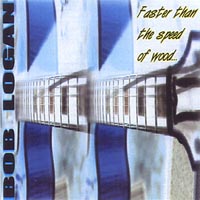
LOGAN is a talented Bay Area guitarist whose stock and trade over the
years has been playing in show bands and supplying soundtracks to Electronic
Arts video games. He is a smoking jazz fusion/jazz funk player who also has a
deft touch on acoustic guitar, all of which is demonstrated on his CD release titled
Faster Than The Speed Of Wood?
Bob is Lee Ritenour-like in a lot of ways, but he's got some
Barney Kessel in him, too. He tends to favor double harmonized leads and, like a
lot of jazz guys his playing is a smorgasboard of techniques and approaches, as
much a part of the movement of each piece as is the infrastructure of chorus,
verse and bridge.
I, RAR, have spent a
lifetime trying and failing to achieve my fondest dream, which is to
establish and maintain a really great band. For some reason I have had
trouble finding a large group of supremely talented musicians who want
nothing more than to unselfishly lay their personal interests aside so that I may fully
satisfy my personal obsession with...well, me. You know, the man and
his music. (You wonder why this hasn’t worked?) Still, I’m a
mere lad, not 54 for another month yet, so figure I have a lot of
time left to achieve my sincere, heartfelt, potentially world-shaking
dream.
To this end, I
recently contacted my dear friend Gary Swan to ask how he goes
about putting together his bands.
Gary
has been a professional musician his entire life, has played with top
players forever, and for the last four has been Music Director (MD)
for the Pointer Sisters.
Here is
Gary
’s advice, written in his email short-hand:
1.The
Golden Rule is “He who has the gig rules.”2.“The
bottom line is money and somebody is paying somewhere.” 3.“Get
your charts done on your songs and horn parts” – I told
Gary
I need horns, you know, like more cowbell – “so when you go out of
town you can pick up horns locally.” 4.“Might
be cheaper to find a locale band and fly in and rehearse them or maybe
taking one great player for your music director. That's how it's done.
With Bonnie Pointer and Mary Wells and lots of other acts I MD for I
send tapes to the local players with charts and arrive three days early
and practice the band and the star for the most part will only make
about a thirty minute sound check.” 5.“If you
are going to get on the track you must go as fast as everyone else,
meaning look pro. Have CD'S & Charts.” 6.“KNOW
your songs. The band is there to go over the music and your performances
should remain flawless, no mistakes. So practice while you wait.”
7.“Sell
CDS at gig to cover the cost.”
And before trying to
become Chris Daniels & the Kings,
Gary
suggested this: “Go book small gigs anywhere or create a gig at a
coffee shop or bar. Perhaps host a jam session. Monday night is always a
good night for a jam session. Or find the jams around you and go listen
to players. The bottom line is the only way to attract players is GIGS!
No promises or ideas are going to bring you players. And if it did
they are not mature and ready to pull off a show of any size and will
look like amateurs. But a gig, wedding, anything will bring you great
players for 50 to $100 bucks.”
So, I'm taking
Gary's advice. I know it's going to be a long, hard road, but look for
me Tuesday and Thursday afternoons down at The Pizza Pirate.
I’ll be playing children's’ birthday parties for awhile, until I can
get my horn band together. Of course, if the kids don’t like me I’ll
have to take a fallback position yet to be determined. Please send your
positive vibes my way. I’d like to make this happen while I can still
affect a comb over.
Gary writes:
"Next we will put up my new book, "MY STRUGGLE TO STAY AT
THE BOTTOM."
BAY
AREA UPDATE:ARE COVER BANDS GOING THE
WAY OF THE TRANSISTOR RADIO?
Here
is a story I never thought I'd live to tell - either a good news or a bad
news item depending upon whether or not you are a songwriter. Bay Area
cover bands have fallen on hard times. Rich Flynn, featured above,
who has played around the Bay Area for years in both cover and original
music units, reports that "bar bands" have fallen out of favor
with a younger generation that would prefer a DJ and current sounds.
"These days if people walk into a place and see a stage set up with
musical instruments, they turn and walk back out the door." The
exception seems to be those venues that are known for featuring original
acts. In San Francisco that would include places like Hotel Utah, The
Paradise Lounge, and Cafe Du Nord, among many other throughout the Bay
Area. It is ridiculously expensive for Bohemian songwriters to try to
survive here - hell, it's ridiculously expensive for corporate cheese
eaters to survive here! - but hard core Bay Area music fans have always
supported the fresh idea, and still do. The cover bands, however, not so
much.

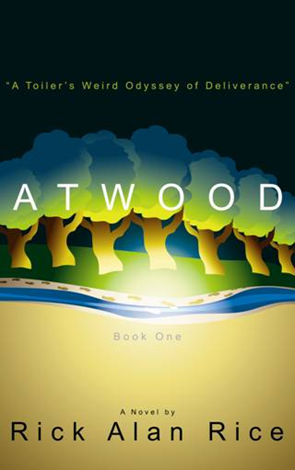
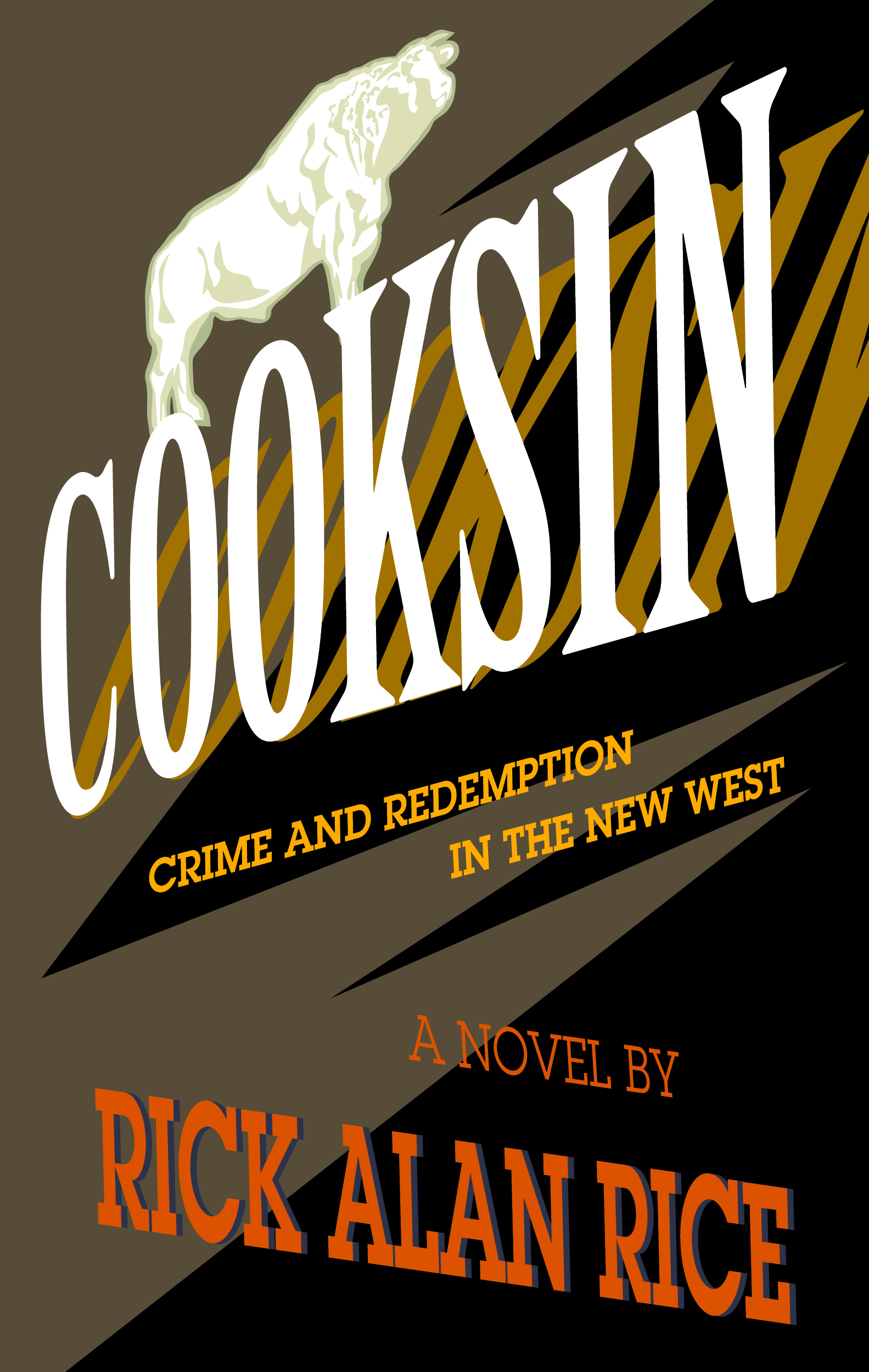
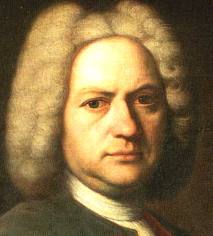 ,
I suspect that Bach may have replied with something like
"Fuck yourself, you idiot moron", because his were less
politically correct times, though I would hope instead that
he might have gotten ironic with it and said something like,
"So you want me to be more like Bruno Mars? Or Jason Mraz?"
Or perhaps simply become curious as to direction and asked
today's music directors - "Where, exactly, are we going with
this?"
,
I suspect that Bach may have replied with something like
"Fuck yourself, you idiot moron", because his were less
politically correct times, though I would hope instead that
he might have gotten ironic with it and said something like,
"So you want me to be more like Bruno Mars? Or Jason Mraz?"
Or perhaps simply become curious as to direction and asked
today's music directors - "Where, exactly, are we going with
this?"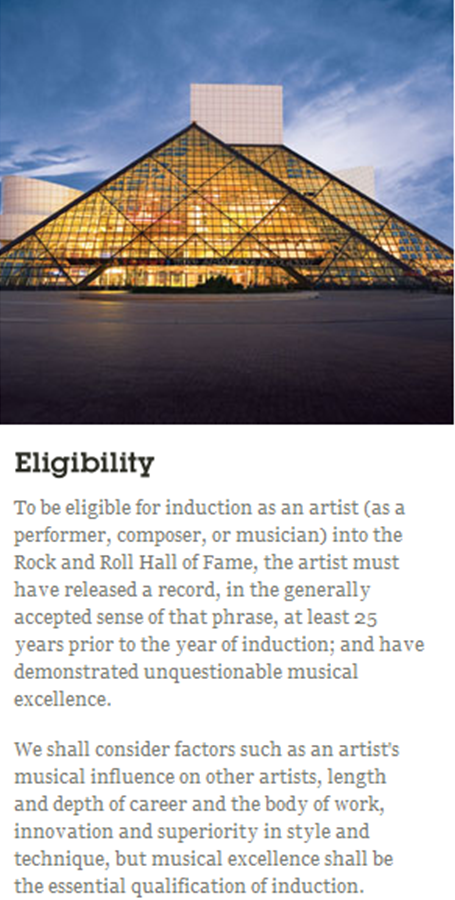
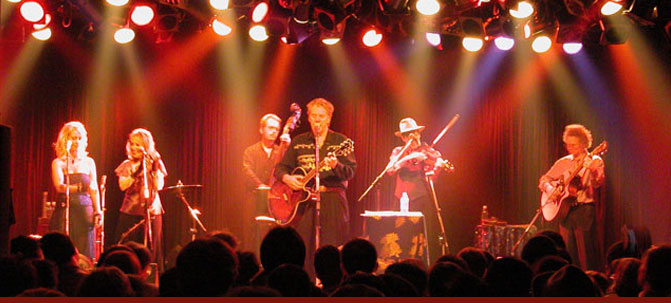
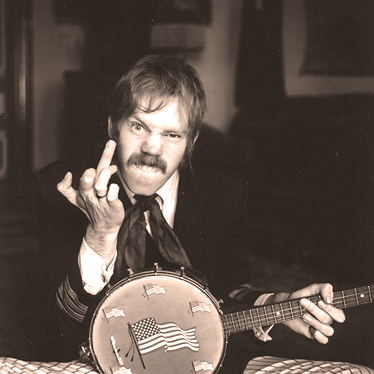
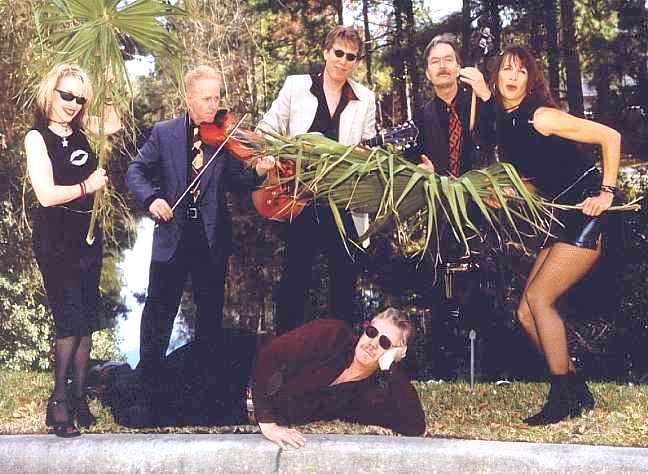
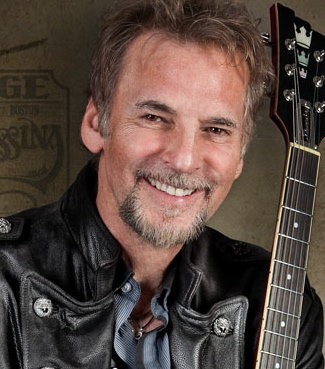 Kenny
Loggins used to be cool.
Kenny
Loggins used to be cool.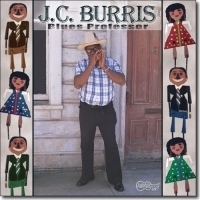
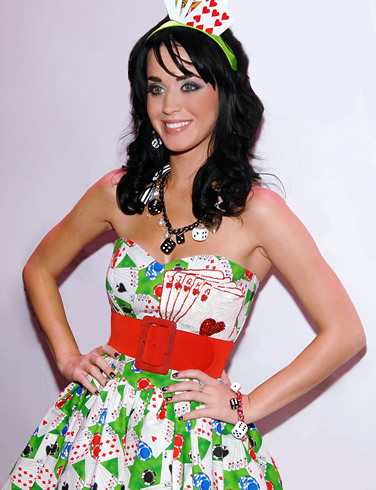 In
the ongoing battle of good vs. evil...
In
the ongoing battle of good vs. evil...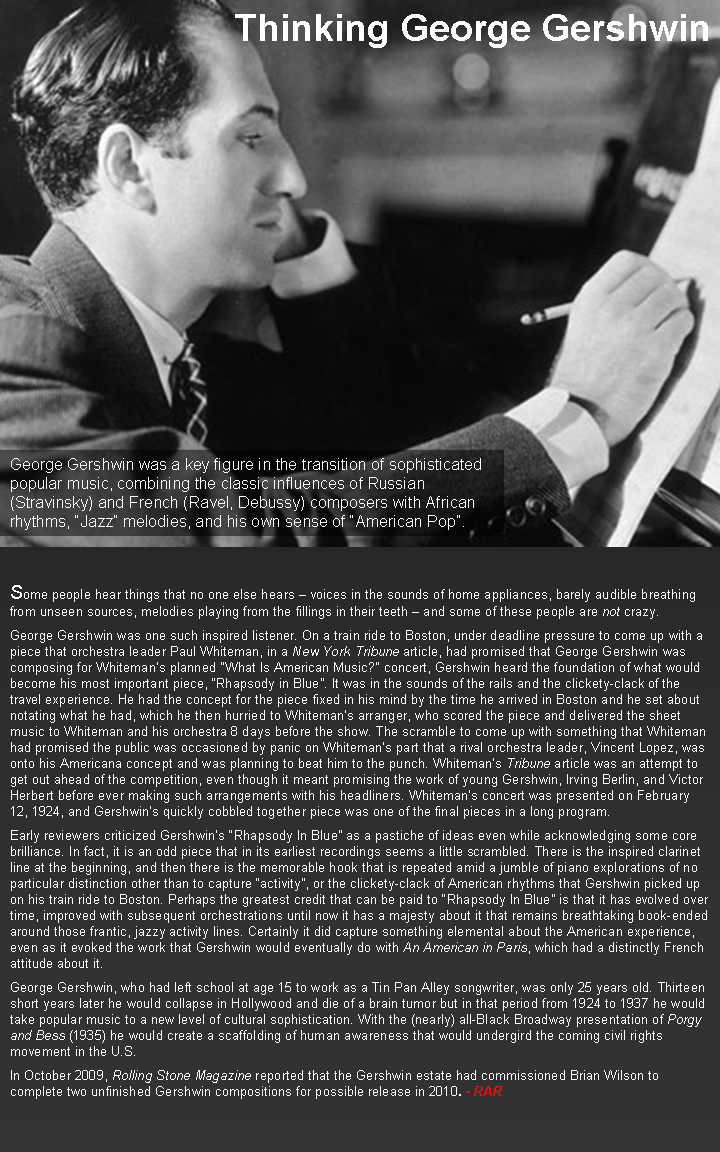
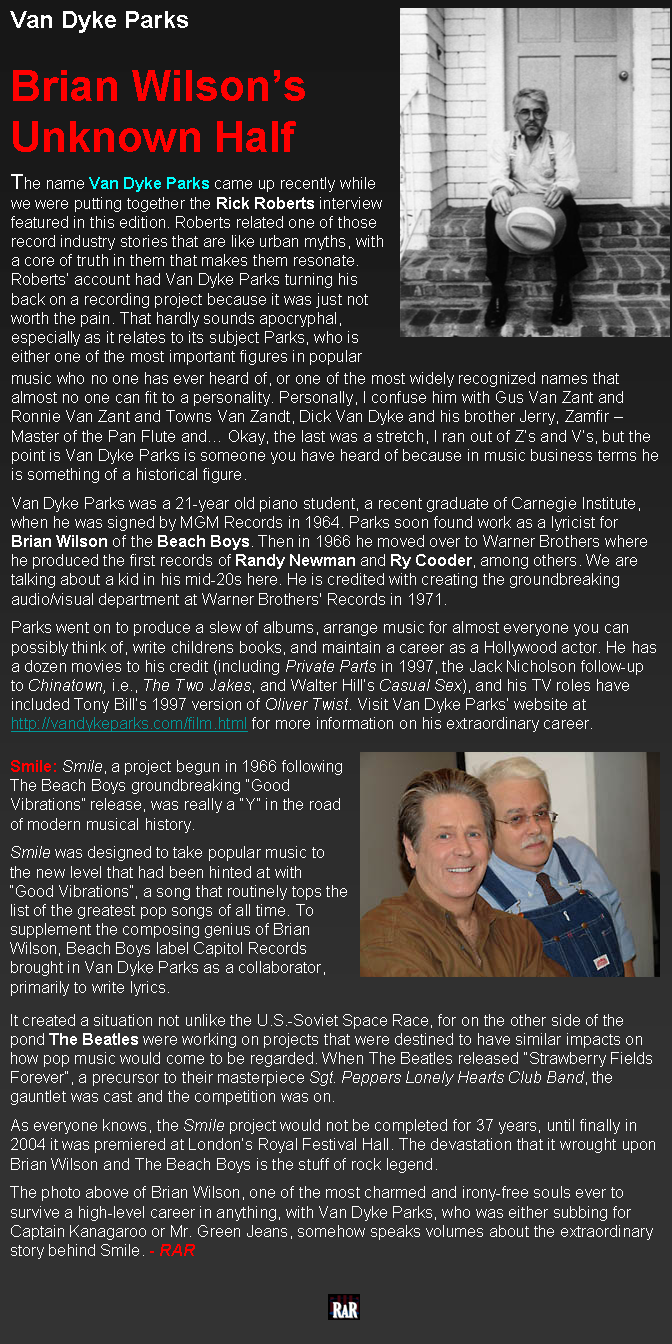
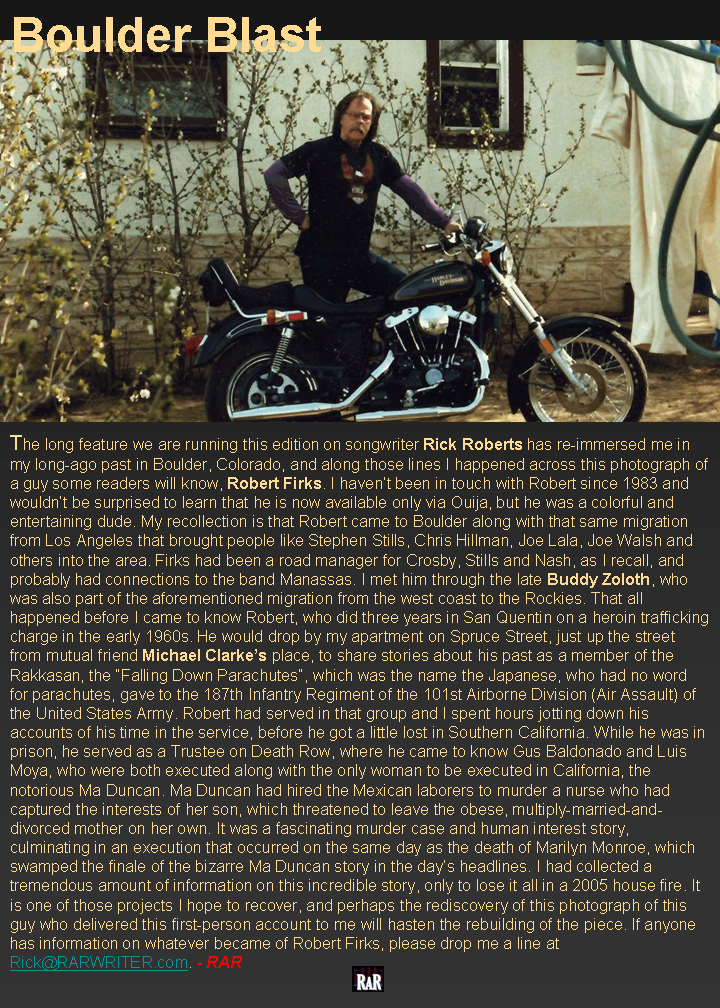
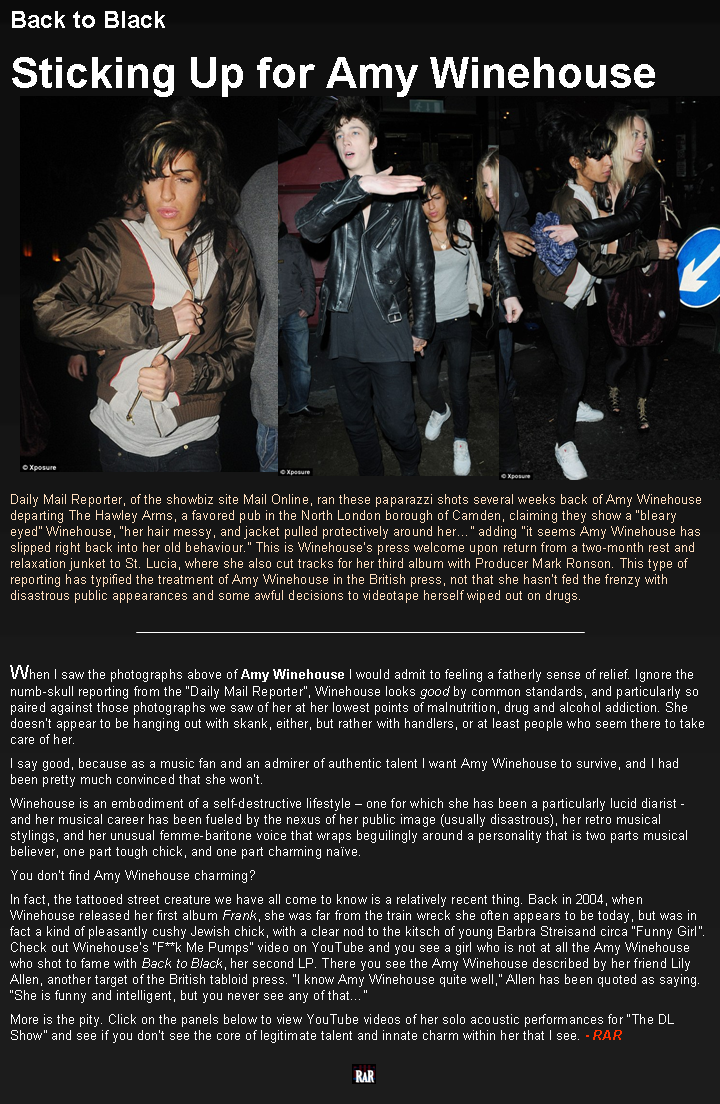
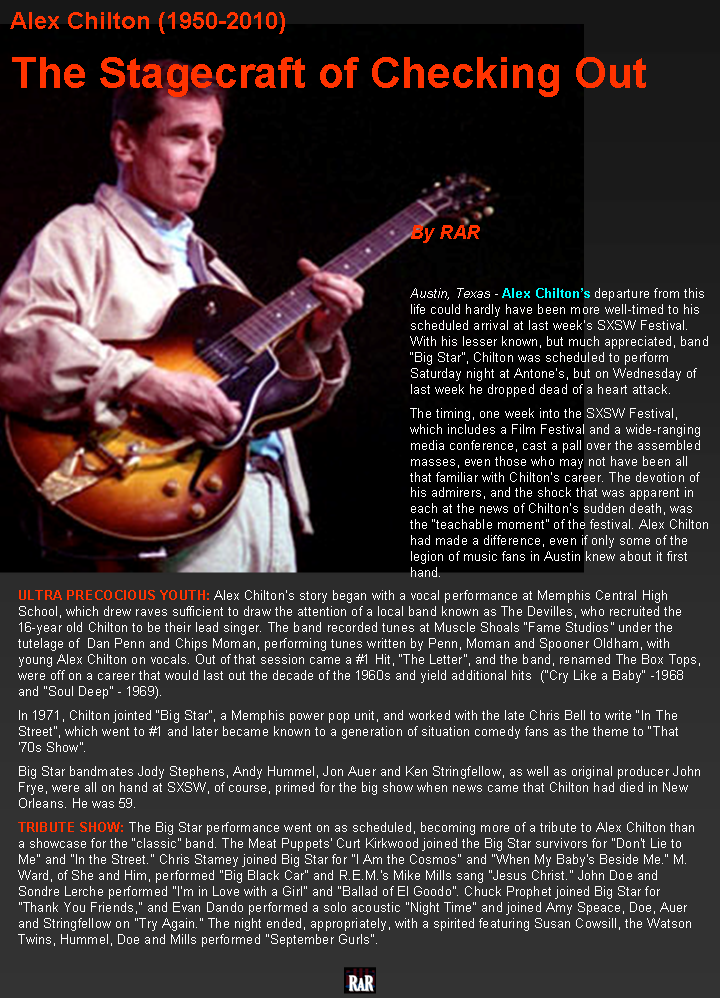
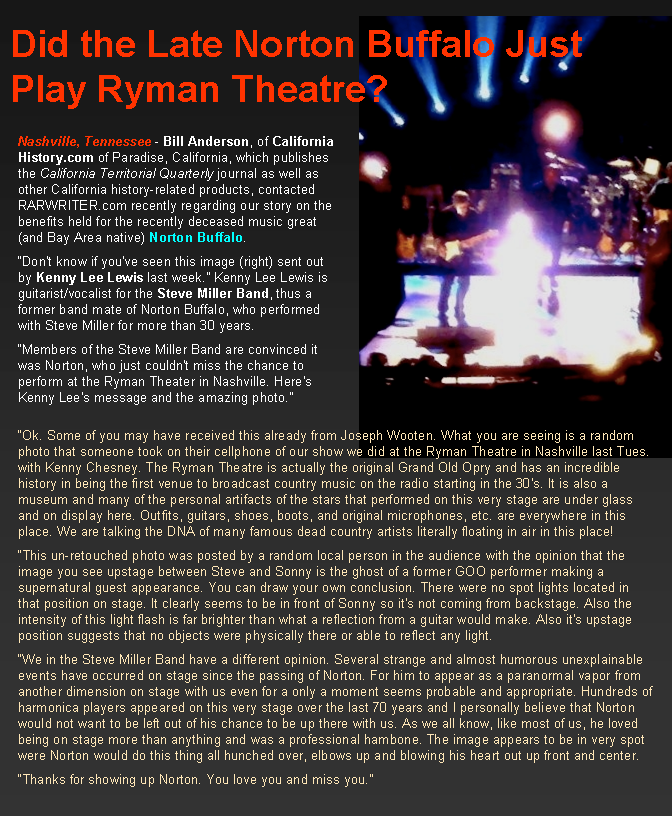
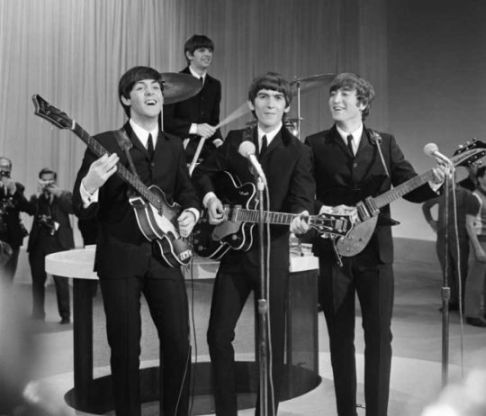
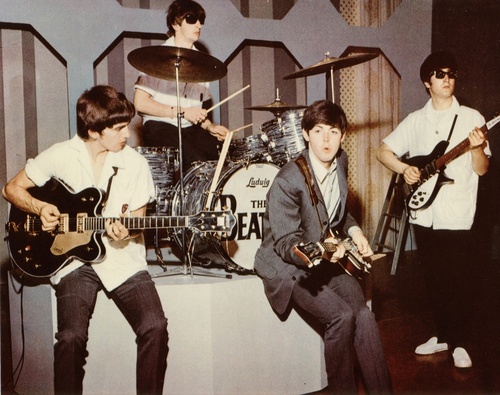
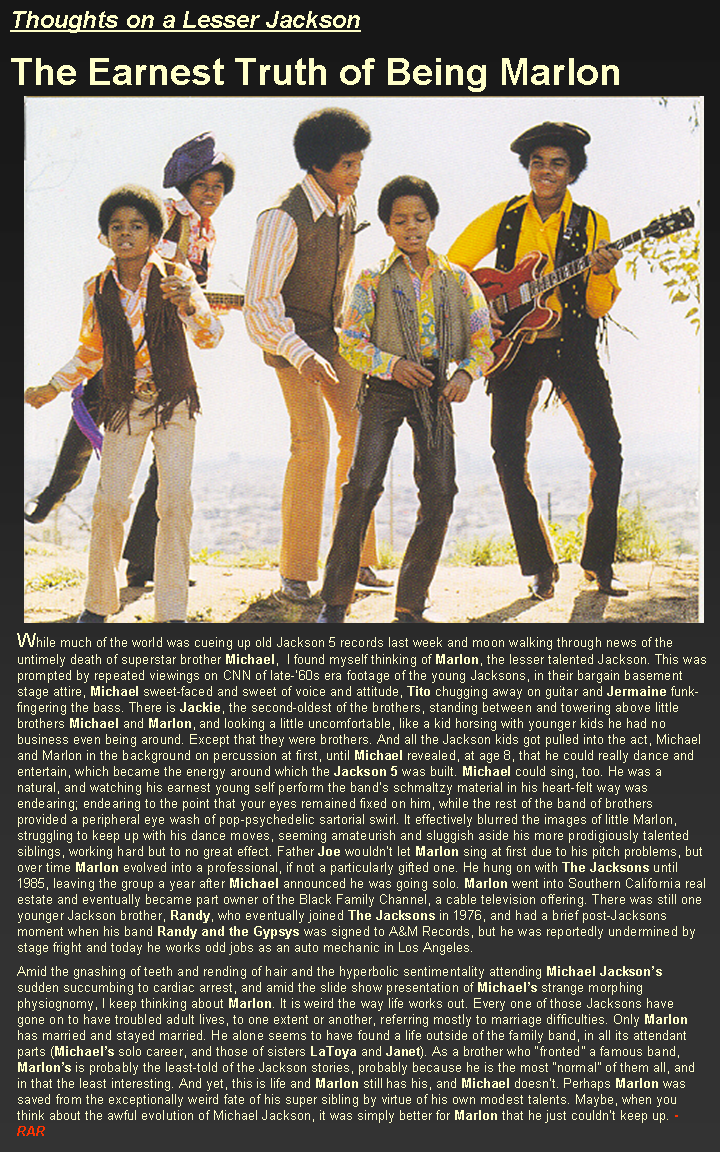
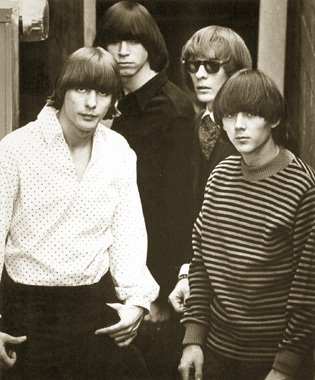
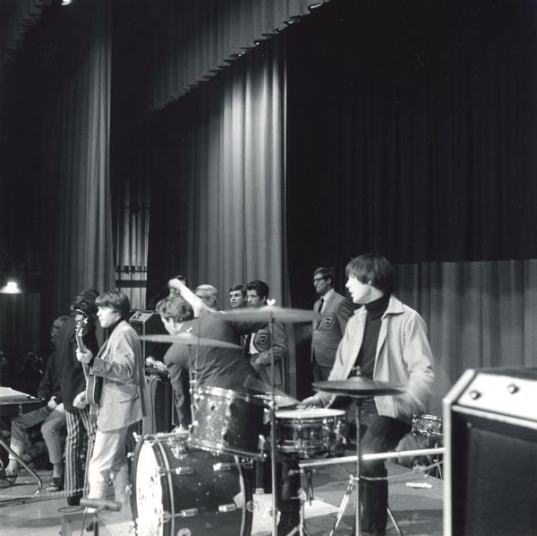
 Genoa,
Italy - Genoa-born Daniele Montella studied art,
painting and sculpture at the Artistic Liceo before becoming Art
Director for Italian advertising agency Artematica. He has been
credited with concept art and painting on numerous video games,
including Crime Stories: From the Files of Martin Mystère
(2004), Leader S.p.a. Druuna: Morbus Gravis (2001), and
MC2-Microïds. You can learn more at Daniele Montella's website
at
Genoa,
Italy - Genoa-born Daniele Montella studied art,
painting and sculpture at the Artistic Liceo before becoming Art
Director for Italian advertising agency Artematica. He has been
credited with concept art and painting on numerous video games,
including Crime Stories: From the Files of Martin Mystère
(2004), Leader S.p.a. Druuna: Morbus Gravis (2001), and
MC2-Microïds. You can learn more at Daniele Montella's website
at 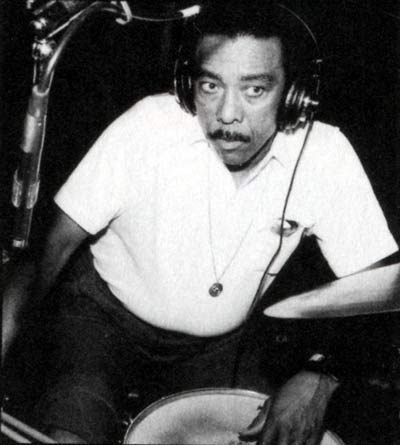
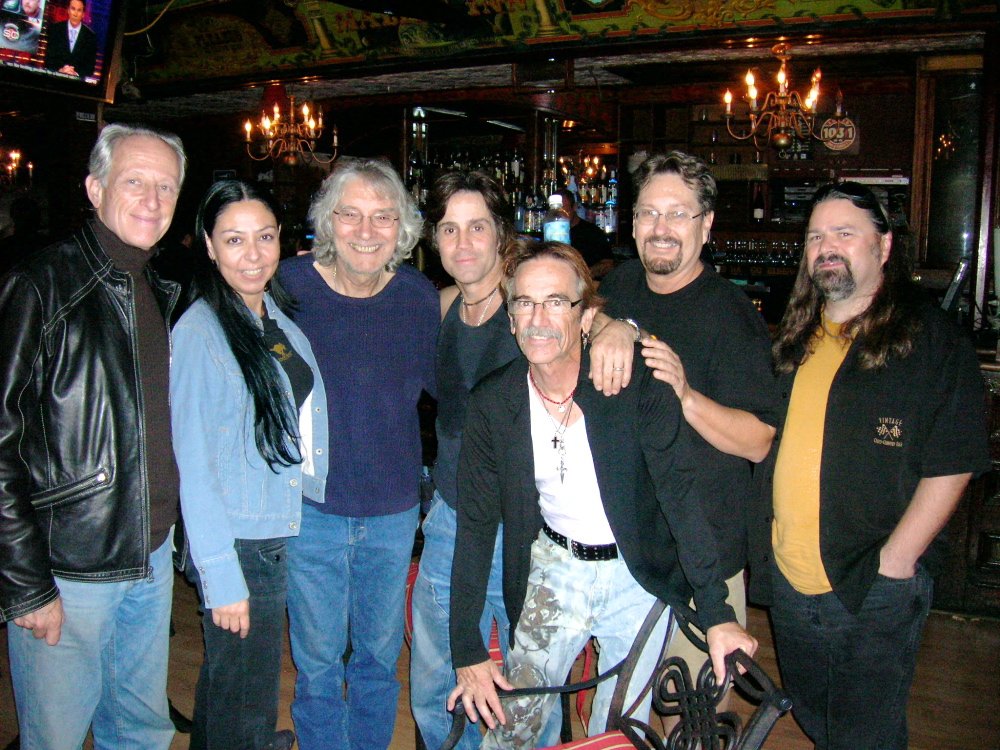
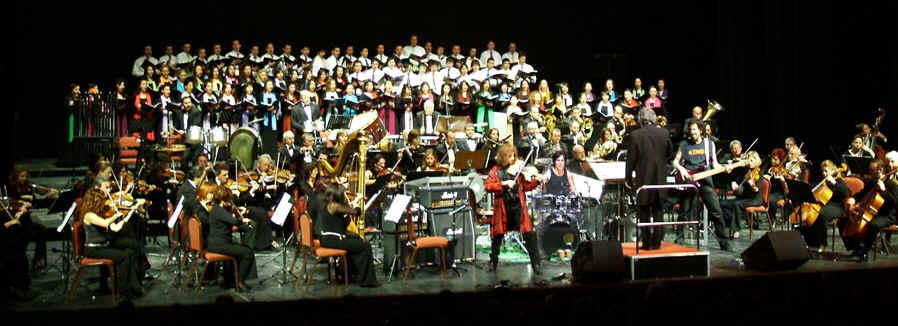
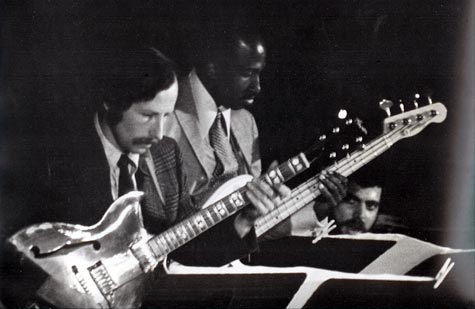 Don
Peake (pictured at left in a 1972
photo taken of him recording Jackson 5 Motown tracks and playing the Crown
guitar that is now part of the permanent iconic guitar collection at
Cleveland's Rock'n Roll Hall of Fame) is one of those guitarists whose
work you have heard your entire life, but whose personal credits may not
have registered. Don Peake was among the guitarists for "The Wrecking
Crew," the name given to the brilliant assembly of musicians brought
together by Phil Spector to build "the wall of sound." He
was also a Motown stalwart, and played lead guitar for Marvin Gaye
("Let's Get It On"), and on many of the Jackson Five's hits,
including “ABC” and “I Want You Back." He recorded with the
Commodores, Smokey Robinson, The Supremes, The Temptations, and many more.
He played on the John Lennon records that Phil Spector produced, and on
all of Barry White's hit records, some of which he arranged. He
went on to become a soundtrack composer for film and television. (He
scored 77 "Night Rider" episodes.) Don has a site at
Don
Peake (pictured at left in a 1972
photo taken of him recording Jackson 5 Motown tracks and playing the Crown
guitar that is now part of the permanent iconic guitar collection at
Cleveland's Rock'n Roll Hall of Fame) is one of those guitarists whose
work you have heard your entire life, but whose personal credits may not
have registered. Don Peake was among the guitarists for "The Wrecking
Crew," the name given to the brilliant assembly of musicians brought
together by Phil Spector to build "the wall of sound." He
was also a Motown stalwart, and played lead guitar for Marvin Gaye
("Let's Get It On"), and on many of the Jackson Five's hits,
including “ABC” and “I Want You Back." He recorded with the
Commodores, Smokey Robinson, The Supremes, The Temptations, and many more.
He played on the John Lennon records that Phil Spector produced, and on
all of Barry White's hit records, some of which he arranged. He
went on to become a soundtrack composer for film and television. (He
scored 77 "Night Rider" episodes.) Don has a site at 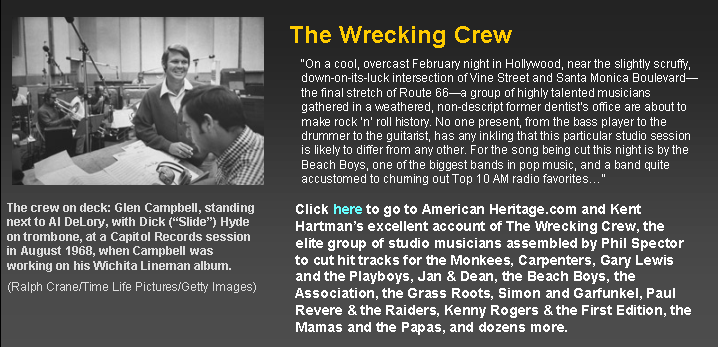
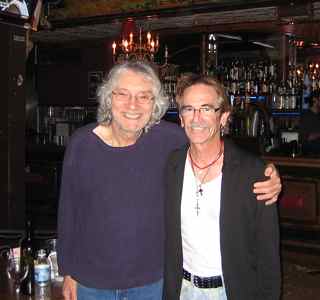
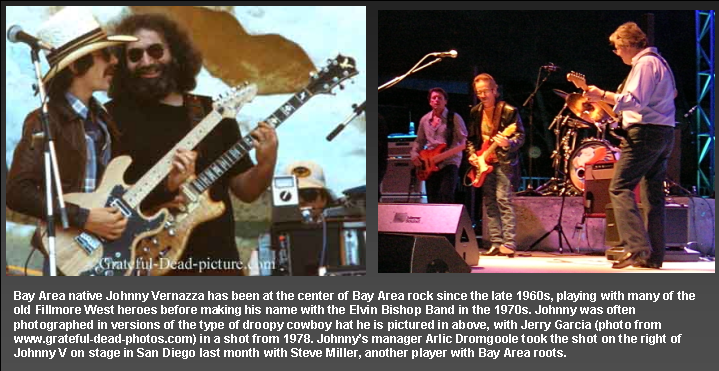
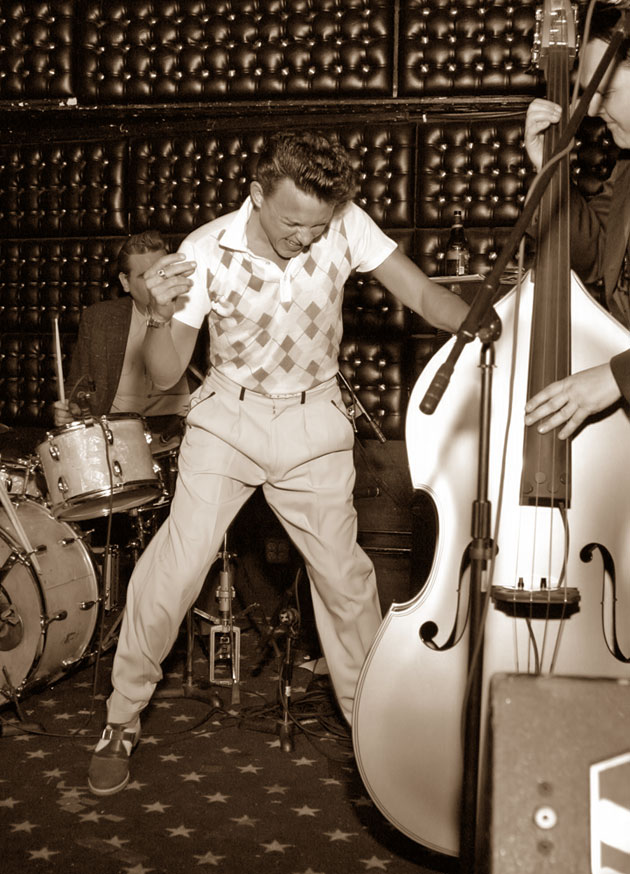
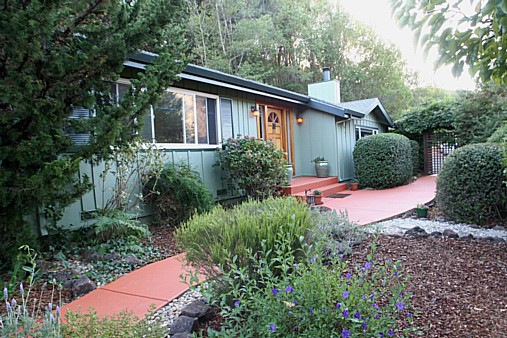







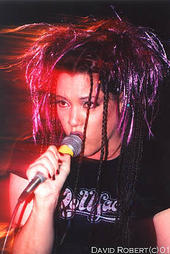
 You
see this girl
You
see this girl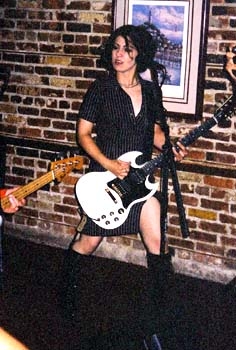
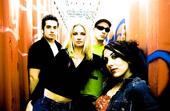
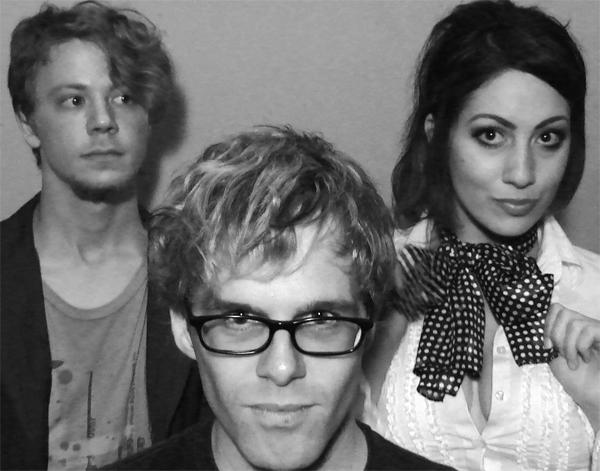
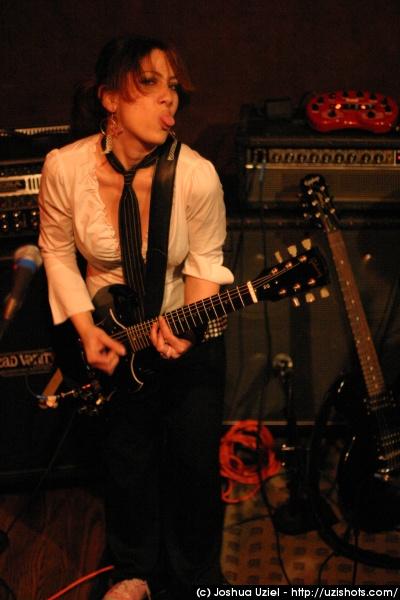 The
charming Ms. Tuesday wrote an email message to me the other day describing
her music career to date.
The
charming Ms. Tuesday wrote an email message to me the other day describing
her music career to date.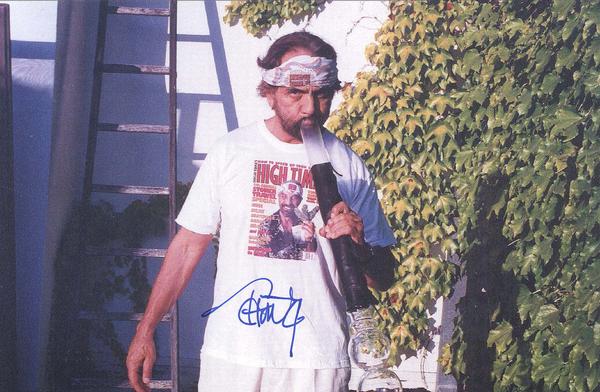
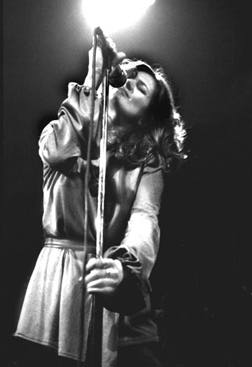 Some
time earlier this year my wife came home from a weekend in the Sierras
where, as she reported with great excitement - "I ran into Lydia
Pense!" I immediately thought that she meant that literally, because
we had occasionally suffered vehicle damage with the wife behind the
wheel. I mean, she doesn't actually know Lydia Pense. Except that,
everyone who was in the San Francisco/Oakland area between 1967 and 1977
feels that they do, because musically speaking they all grew up with Lydia
Pense. She, to this day, is the female voice of San Francisco, even
more so than Joplin ever was because Janice left, and then she left
forever, and Lydia remains.
Some
time earlier this year my wife came home from a weekend in the Sierras
where, as she reported with great excitement - "I ran into Lydia
Pense!" I immediately thought that she meant that literally, because
we had occasionally suffered vehicle damage with the wife behind the
wheel. I mean, she doesn't actually know Lydia Pense. Except that,
everyone who was in the San Francisco/Oakland area between 1967 and 1977
feels that they do, because musically speaking they all grew up with Lydia
Pense. She, to this day, is the female voice of San Francisco, even
more so than Joplin ever was because Janice left, and then she left
forever, and Lydia remains.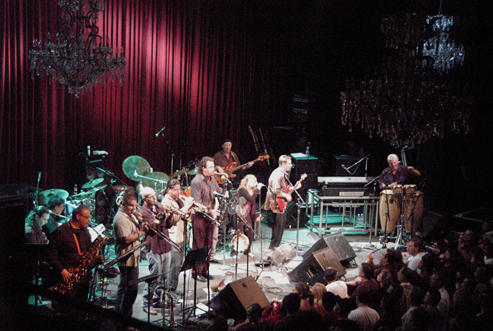
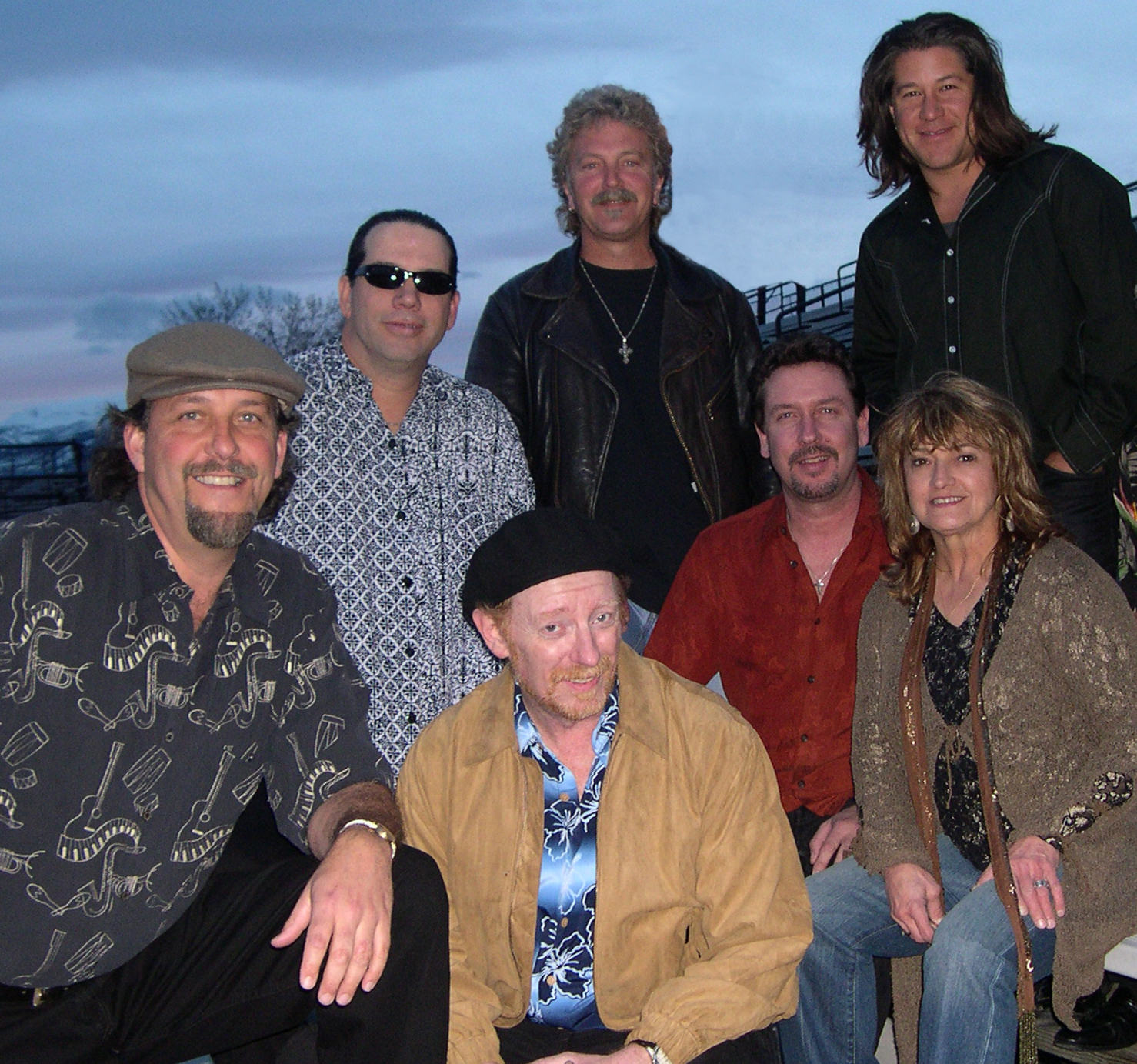
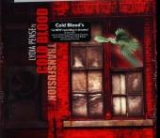
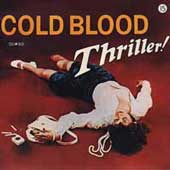
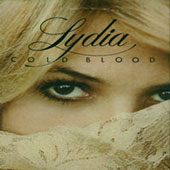
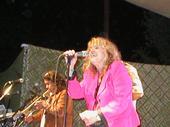 About 1974 Cold
Blood, as a band, had one of those moments of truth and recognized their
star. They went from the album on the left to the image on the right, and
forever more became "Lydia Pense and Cold Blood." The very
provocative cover of Lydia is deceiving, however, because they
weren't really selling a gorgeous chick. They were selling the best rock'n
blues singer of her day - and many other. Lydia was produced by
guitar man Steve Cropper, who was a big part of the Stax Records house
band Booker T. and the MGs.
About 1974 Cold
Blood, as a band, had one of those moments of truth and recognized their
star. They went from the album on the left to the image on the right, and
forever more became "Lydia Pense and Cold Blood." The very
provocative cover of Lydia is deceiving, however, because they
weren't really selling a gorgeous chick. They were selling the best rock'n
blues singer of her day - and many other. Lydia was produced by
guitar man Steve Cropper, who was a big part of the Stax Records house
band Booker T. and the MGs.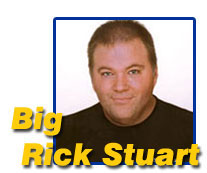
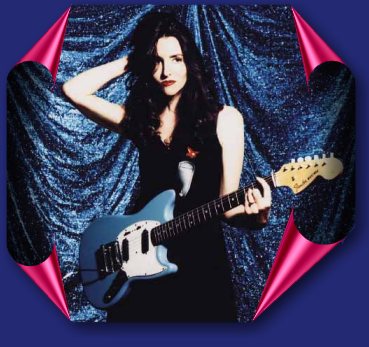
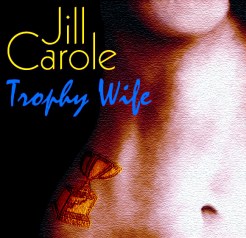
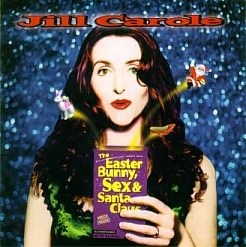
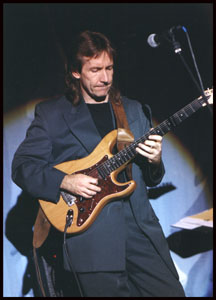 BOB
LOGAN is a talented Bay Area guitarist whose stock and trade over the
years has been playing in show bands and supplying soundtracks to Electronic
Arts video games. He is a smoking jazz fusion/jazz funk player who also has a
deft touch on acoustic guitar, all of which is demonstrated on his CD release titled
Faster Than The Speed Of Wood?
BOB
LOGAN is a talented Bay Area guitarist whose stock and trade over the
years has been playing in show bands and supplying soundtracks to Electronic
Arts video games. He is a smoking jazz fusion/jazz funk player who also has a
deft touch on acoustic guitar, all of which is demonstrated on his CD release titled
Faster Than The Speed Of Wood?